Birth is one of the most incredible experiences a family can go through.
It’s powerful. Emotional. Unpredictable. And sometimes, incredibly challenging.
For some families, birth unfolds much like they imagined. For others, it involves unexpected interventions, long hours of labor, an emergency C-section, a NICU stay, or moments when things become frightening very quickly.
And once baby arrives, the focus naturally shifts toward feeding schedules, diaper changes, sleep, and adjusting to life as a family.
But sometimes, parents begin noticing things that leave them wondering whether their baby’s birth experience may have played a role.
Difficulty latching.
Preference turning their head one direction.
Arching, stiffness, or unusual tension.
Trouble settling.
Reflux, constipation, or persistent discomfort.
A baby who seems to have a hard time relaxing, even when they’re being held, fed, and comforted.
While these challenges can have many different causes, understanding a baby’s pregnancy and birth history can be an important part of understanding their overall health and development.
At Foundations Chiropractic, we believe birth stories matter.
Not because every challenging delivery causes lasting problems.
And certainly not because parents should feel guilty about the decisions made during labor and delivery.
But because understanding what a baby’s body experienced during birth can help guide thoughtful, individualized support as they grow.
What Is Birth Trauma?
The term birth trauma can describe both physical injuries associated with labor and delivery and the emotional or psychological impact of a difficult birth experience.
For babies, physical birth injuries can range from minor bruising or swelling to more significant concerns involving muscles, bones, or nerves.
For mothers, birth trauma may involve physical recovery challenges as well as the emotional impact of experiencing a frightening, unexpected, or overwhelming delivery.
Sometimes birth trauma is immediately recognizable.
Other times, families may not fully process what happened until weeks or months later.
And sometimes, a birth that appears medically uncomplicated can still feel traumatic to the mother.
That’s an important distinction.
A medically successful birth and an emotionally difficult birth can both be true at the same time.
Every family’s experience deserves to be heard and respected.
Birth Is a Significant Physical Experience for Baby
Throughout pregnancy, your baby grows and develops in a protected environment.
Then, during labor and delivery, their body goes through an incredible transition.
During vaginal birth, babies experience pressure, compression, and rotation as they move through the birth canal.
In other situations, additional interventions may be necessary to help bring baby safely into the world.
These can include induction, vacuum extraction, forceps-assisted delivery, or cesarean birth.
Each birth experience is different.
And while the newborn body is remarkably designed to adapt to birth, complications or physical injuries can sometimes occur.
This is one reason we believe a baby’s birth history deserves attention when evaluating concerns related to feeding, movement, muscle tone, or overall comfort.
It’s not about assuming that birth caused a problem.
It’s about making sure we understand the whole story.
Different Birth Experiences and Their Potential Impact
There are several circumstances that can increase the likelihood of physical stress or injury during delivery.
Prolonged or Difficult Labor
When labor continues for an extended period, both mom and baby may experience increased physical demands.
Depending on the circumstances, prolonged labor can sometimes be associated with concerns involving positioning, pressure, or delivery complications.
For babies who experience difficulties after birth, understanding the length and circumstances of labor may help healthcare providers determine whether further assessment is needed.
Rapid Labor
On the opposite end, some babies arrive much faster than expected.
Rapid labor can be intense for both mother and baby and, in certain situations, may be associated with delivery-related complications.
Not every fast birth is traumatic, but it can still be an important part of the family’s story.
Vacuum or Forceps-Assisted Delivery
When additional assistance is needed during delivery, providers may use vacuum extraction or forceps.
These tools can be necessary to help deliver a baby safely.
However, assisted deliveries can also increase the risk of certain birth injuries, including bruising, swelling, or nerve-related concerns.
If a baby experiences unusual weakness, asymmetrical movement, or other concerning symptoms following an assisted birth, appropriate medical evaluation is important.
Cesarean Birth
C-sections can be planned or unexpected, and they can be essential for protecting the health of both mom and baby.
Some babies delivered by C-section may experience temporary respiratory or transitional challenges, depending on the circumstances.
But a C-section itself does not mean a baby has experienced neurological injury or will have developmental difficulties.
We never want families to feel that the way their baby was born determines their future health.
Instead, our goal is to understand each family’s experience and support them moving forward.
The Nervous System: A Foundation for Early Development
One of the most remarkable things about newborns is how much development is happening beneath the surface.
From the very beginning, the nervous system is helping coordinate essential functions throughout the body.
It plays an important role in:
-
Breathing and heart rate
-
Feeding and swallowing
-
Digestion
-
Sleep and wakefulness
-
Movement and muscle tone
-
Reflexes
-
Sensory responses
-
Stress and recovery
-
Early interactions with caregivers
And during infancy, these systems are developing rapidly.
Babies are constantly learning how to adapt to the world outside the womb.
They are adjusting to light, sound, touch, temperature changes, movement, feeding, and entirely new patterns of sleep.
That is a lot of new information for a developing nervous system to process.
This is why we care so deeply about nervous system function during those early stages of life.
When we understand how the nervous system coordinates movement, comfort, and regulation, we have a broader perspective on the challenges some babies experience.
The Vagus Nerve and Your Baby’s Developing Body
One important part of the nervous system is the vagus nerve.
The vagus nerve connects the brainstem with several major organs, including the heart, lungs, and digestive system.
It is a key component of the parasympathetic nervous system, which helps coordinate functions associated with rest, digestion, and recovery.
The vagus nerve participates in regulating:
-
Heart rate
-
Digestion
-
Breathing
-
Gut-brain communication
-
Certain inflammatory responses
-
Recovery following stress
These functions are especially important during infancy, when babies are learning to feed, digest, sleep, and adapt to their surroundings.
Because of these connections, researchers continue exploring how autonomic regulation develops throughout infancy and childhood.
However, concerns like colic, reflux, poor sleep, or feeding difficulties do not automatically indicate vagus nerve dysfunction.
These symptoms can have several causes, and they deserve appropriate evaluation.
At Foundations Chiropractic, we look at the nervous system as one part of the larger picture rather than assuming every symptom begins in one location.
What Parents May Notice After a Difficult Birth
Some babies experience challenges in the days or weeks following delivery.
These may include:
-
Difficulty latching or maintaining a comfortable latch
-
Preference feeding on one side
-
Difficulty turning the head in both directions
-
Tension or stiffness
-
Arching during feeding or when being held
-
Excessive crying or difficulty settling
-
Frequent spit-up or reflux symptoms
-
Constipation or other digestive concerns
-
Challenges with sleep
-
Flattening or asymmetry of the head
-
Differences in movement or muscle tone
It’s important to remember that these signs are not specific to birth trauma.
For example, feeding difficulties may involve oral function, positioning, milk transfer, or other concerns.
A preference for turning the head one way may be related to muscular tightness or torticollis.
Digestive symptoms may have feeding-related or gastrointestinal explanations.
And frequent crying can occur for many reasons.
The goal isn’t to label every struggle as a birth injury.
It’s to recognize when a baby may benefit from further assessment and additional support.
Signs That Need Prompt Medical Attention
Some symptoms following birth should always be evaluated by a medical professional.
These include:
-
Seizures or repetitive movements concerning for seizures
-
Difficulty breathing
-
Poor feeding or signs of dehydration
-
Unusual weakness or limited movement of an arm or leg
-
Excessive sleepiness or difficulty waking
-
Abnormal muscle tone
-
Persistent or worsening symptoms
-
Concerns about development or responsiveness
If your baby has trouble breathing, experiences a seizure, or is difficult to wake, seek emergency medical care.
A nervous system-focused assessment should never replace medical evaluation for possible birth injury or other serious conditions.
Why Early Movement and Development Matter
The first year of life is an incredible period of growth.
Your baby learns to lift their head, reach, roll, sit, crawl, and eventually stand and walk.
Every movement provides sensory information that helps the brain develop and coordinate new skills.
Movement also helps babies explore their surroundings, build strength, and learn how their bodies work.
This is why healthcare providers pay attention to symmetry, muscle tone, range of motion, and developmental milestones.
A baby who consistently favors one side, struggles with certain movements, or shows unusual tension may benefit from further evaluation.
Depending on the concern, that might include a pediatrician, pediatric physical therapist, occupational therapist, feeding specialist, or another qualified professional.
At Foundations Chiropractic, we’re interested in understanding these movement and tension patterns as part of a baby’s overall health history.
The Perfect Storm: Looking at the Bigger Picture
At Foundations Chiropractic, we often talk about a concept called The Perfect Storm.
It’s a way of describing how multiple physical, emotional, and environmental stressors can accumulate throughout life.
For some families, the story may include a stressful pregnancy, a difficult birth, early feeding concerns, illness, disrupted sleep, or other challenges.
These experiences may influence a family’s health and daily life in different ways.
However, they do not follow one predictable sequence, and experiencing birth stress does not mean a child will develop neurological or behavioral conditions.
Autism, ADHD, sensory processing challenges, and other developmental differences are complex and cannot be attributed to birth trauma alone.
We believe the value of understanding a child’s history is not in predicting their future.
It’s in recognizing what they have experienced and identifying where additional support may be helpful.
What About Mom?
Birth trauma isn’t only about the baby.
Sometimes, the greatest challenges following delivery are experienced by the mother.
A difficult birth can leave a mom dealing with physical pain, exhaustion, anxiety, or emotions she wasn’t expecting.
She may replay certain moments.
She may feel overwhelmed when thinking about the delivery.
She may experience fear surrounding her baby’s health.
Or she may feel disconnected from what she imagined the birth experience would be.
These experiences deserve compassion and appropriate support.
Postpartum anxiety, depression, and post-traumatic stress symptoms are real health concerns.
They are not signs of weakness.
And they deserve to be addressed through qualified medical and mental health care.
At Foundations Chiropractic, we care about the health of the whole family.
That includes supporting moms physically and emotionally while recognizing when additional postpartum resources are needed.
Because supporting baby also means remembering the mother who brought them into the world.
Understanding Co-Regulation Between Mom and Baby
One of the beautiful things about early development is the connection between a baby and their caregivers.
Newborns depend on adults to help them feel safe, comfortable, and supported.
This is often described as co-regulation.
Babies experience comfort through familiar voices, gentle touch, feeding, holding, and responsive care.
Over time, these interactions help support the development of emotional and physiological regulation.
For a family recovering from a difficult birth, building those moments of connection can be especially meaningful.
But co-regulation doesn’t require a perfectly calm parent.
It happens through ordinary moments of care, responsiveness, and connection.
And when parents have support themselves, they may have more capacity to navigate the demands of caring for a newborn.
How INSiGHT Scans Help Us Look Deeper
At Foundations Chiropractic, we use INSiGHT Scans as part of our neurologically-focused assessment process when appropriate for the patient.
These gentle, non-invasive tools provide additional information about certain physiological patterns related to nervous system function.
Our INSiGHT technology includes three components.
Heart Rate Variability (HRV) measures variation in the time between heartbeats and provides information about aspects of autonomic activity.
Surface Electromyography (sEMG) measures electrical activity associated with muscle activation, helping our doctors observe neuromuscular patterns.
NeuroThermal Scanning measures temperature differences along the skin.
We use these findings alongside a patient’s health history, clinical assessment, and individual goals to help guide our approach and observe changes over time.
It’s important to understand that INSiGHT Scans do not diagnose birth trauma, vagus nerve injury, dysautonomia, developmental delays, or other medical conditions.
They also cannot establish whether birth experiences caused a child’s symptoms.
They are one component of our broader assessment process.
How Neurologically-Focused Chiropractic Care Fits In
At Foundations Chiropractic, we focus on supporting nervous system function, movement, comfort, and overall well-being through gentle, individualized chiropractic care.
Our doctors take time to understand a child’s pregnancy and birth history, early development, movement patterns, and any concerns their family is experiencing.
For infants, assessments and any recommended care are tailored to their age, needs, and physical development.
Our goal is not to treat or cure birth injuries, seizures, developmental disorders, or other medical conditions.
And chiropractic adjustments have not been established as a way to prevent Autism, ADHD, or other neurological diagnoses following birth trauma.
We believe families deserve coordinated care that respects the roles of pediatricians, lactation consultants, therapists, and other qualified providers.
For some families, neurologically-focused chiropractic care may be one supportive part of that broader approach.
What a Newborn Visit at Foundations Looks Like
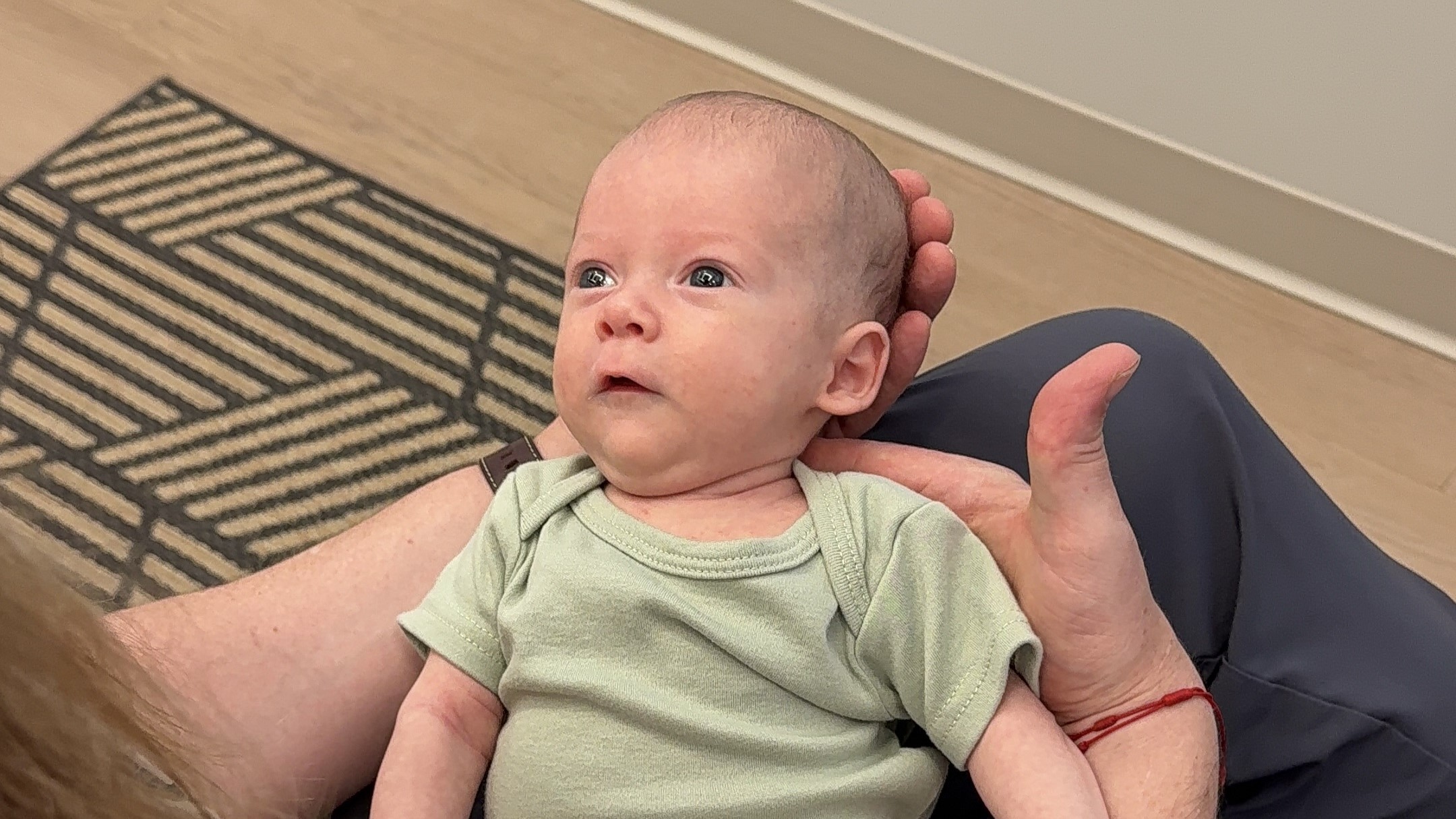
A newborn visit at Foundations Chiropractic begins with listening.
We want to understand your baby’s story.
That includes pregnancy, labor and delivery, feeding, digestion, sleep, movement, and any concerns you’ve noticed at home.
Depending on the baby’s age and needs, the visit may include:
-
A detailed pregnancy and birth history
-
Discussion of feeding and digestive concerns
-
Observation of posture and movement
-
Gentle assessment of muscle tension and range of motion
-
Review of developmental milestones
-
INSiGHT Scans when appropriate
-
Recommendations tailored to your baby’s individual needs
If we identify concerns that need medical evaluation or specialized support, we encourage families to connect with the appropriate provider.
The goal is to help parents feel informed, comfortable, and supported throughout the process.
Your Baby’s Birth Story Matters, but It Doesn’t Define Their Future
One of the most important things we want parents to understand is that a difficult birth does not automatically mean a difficult childhood.
A C-section does not mean your baby’s nervous system is damaged.
A vacuum-assisted delivery does not mean developmental challenges are inevitable.
And a stressful pregnancy does not mean you’ve somehow failed your child.
Birth stories can provide valuable health history.
But they are not a prediction of who your child will become.
The developing nervous system has an incredible capacity for growth and adaptation.
And children benefit from thoughtful healthcare, responsive relationships, opportunities for movement, appropriate developmental support, and environments that help them feel safe and connected.
A Strong Foundation From the Very Beginning
Every baby enters the world with a unique story.
Some births are calm and uncomplicated.
Others involve unexpected challenges, difficult decisions, or moments that families will remember forever.
At Foundations Chiropractic, we believe every family deserves to have that story heard.
We believe in looking at the whole child.
Their birth experience.
Their development.
Their physical comfort.
Their nervous system.
Their movement.
And the concerns their parents notice along the way.
Not with fear.
Not with blame.
And not with promises of a perfect outcome.
But with compassion, education, and a commitment to supporting families from the very beginning.
Because birth is only the beginning of your child’s story, and every family deserves a strong foundation for the journey ahead.