If you’re reading this after another long, exhausting bedtime battle, you’re not alone.
Maybe your child is clearly tired, but somehow still can’t settle down. Maybe they toss and turn for hours, wake up multiple times a night, or pop awake way too early and start the day already running on fumes. Maybe you’ve tried all the usual things—earlier bedtime, blackout curtains, magnesium, melatonin, sound machines, a perfect bedtime routine—and yet your child still can’t seem to truly rest.
That’s often the moment parents start asking the bigger question:
Why is my child so exhausted… but still unable to sleep?
And the answer, more often than not, is this: it’s not just a sleep problem.
It’s a nervous system problem.
Sleep Is Not “Just Rest”
Sleep is when a child’s brain and body do some of their most important healing, growing, and developing.
While your child is asleep, their body is hard at work. Their brain is organizing memories and learning from the day. Their body is releasing growth hormone. Their immune system is strengthening and rebuilding. Their brain is processing emotions and resetting for the next day.
In other words, sleep is not passive. Sleep is productive.
It’s one of the most important times for a child’s body to repair, regulate, and grow.
That’s why poor sleep affects so much more than just bedtime.
When a child isn’t sleeping well, it often shows up as:
trouble focusing,
more meltdowns,
bigger emotions,
hyperactivity,
frequent sickness,
slow recovery,
struggles with learning,
and a child who just never seems fully rested.
And here’s the part most families are never told:
All of those restorative processes depend on the nervous system being able to shift into the right state.
If the nervous system is stuck in stress mode, the body may be exhausted—but it still won’t feel safe enough to fully rest.
The “Tired but Wired” Pattern
This is one of the most common patterns we see.
Parents will say things like:
“My child is exhausted, but they just can’t turn it off.”
“They look so tired, but bedtime takes forever.”
“They wake up constantly and never seem deeply asleep.”
“They’re running on empty, but somehow still bouncing off the walls.”
That tired-but-wired pattern is a huge clue that the nervous system is under stress.
When the body is stuck in fight-or-flight, the “gas pedal” of the nervous system stays pressed down. The calming, regulating side of the nervous system—the “brake pedal”—can’t take over the way it’s supposed to.
So even though your child needs rest, their body doesn’t know how to shift into it.
That’s why so many kids can’t fall asleep easily, stay asleep well, or wake up feeling refreshed.
It’s not that they’re being difficult.
It’s not that they’re fighting sleep on purpose.
And it’s not always something they’ll simply outgrow.
Often, their nervous system is stuck in a stress pattern that won’t let them settle.
The Nervous System Controls Sleep
Sleep doesn’t just happen because the lights are off and the bedtime routine is done.
Sleep happens when the nervous system is able to change gears.
Your child’s autonomic nervous system is the part of the body that controls automatic functions like heart rate, digestion, breathing, immune function, and sleep. It has two main branches:
The sympathetic nervous system is the gas pedal. It helps the body stay alert, active, and ready to respond to stress.
The parasympathetic nervous system is the brake pedal. It helps the body calm down, regulate, digest, heal, and rest.
For sleep to happen well, the parasympathetic side needs to step in and take over.
One of the biggest players in that process is the vagus nerve.
The vagus nerve helps slow the heart rate, relax the body, regulate digestion, and signal safety to the brain and body. It plays a major role in helping a child shift out of stress mode and into a state where deep, restorative sleep can happen.
But when there is interference and tension in the neurospinal system—what we call subluxation—that communication can get disrupted.
From the outside, it looks like a sleep issue.
From the inside, it’s often a child whose nervous system cannot properly regulate.
Sleep Struggles Are Often One of the First Warning Signs
One of the biggest mistakes families are told is that sleep is just about habits or behavior.
Of course healthy routines matter. Bedtime rhythm matters. Screen limits matter.
But if your child’s nervous system is dysregulated, those things alone often won’t be enough.
In many children, sleep struggles are one of the earliest signs that the autonomic nervous system is under stress.
Before digestive issues get worse.
Before focus challenges become obvious.
Before immune struggles stack up.
Before bigger emotional and behavioral symptoms show up.
Sleep is often the first red flag.
It’s the canary in the coal mine.
When a child can’t settle, can’t stay asleep, or never seems well-rested, it may be the nervous system waving a flag and saying, “Something deeper is going on here.”
How the “Perfect Storm” Can Disrupt Sleep Early On
For most kids, sleep struggles don’t come out of nowhere.
When we look closer, there’s usually a pattern of stressors that have built up over time. At Foundations Chiropractic, we often call this the Perfect Storm.
It’s the combination of prenatal stress, birth stress, and early childhood stressors that can overload a child’s nervous system and leave it stuck in a state of dysfunction.
That can start during pregnancy.
If mom experienced high stress during pregnancy, that stress chemistry can impact how baby’s developing nervous system is wired. These babies often arrive already more sensitive, more unsettled, and more prone to challenges with sleep, calming, and regulation.
Then comes birth.
Even in the best circumstances, birth is intense. But inductions, long labors, C-sections, forceps, vacuum extraction, breech positioning, or manual pulling on baby’s head and neck can create stress and tension in the upper neck and nervous system.
That matters because the upper neck and brainstem are incredibly important areas for nervous system regulation, including vagus nerve function.
Then early childhood adds even more layers.
Frequent illness.
Antibiotic use.
Digestive struggles.
Reflux.
Constipation.
Sensory sensitivity.
Chronic stress.
Developmental challenges.
Each one adds more stress to an already overwhelmed system.
By the time the family is dealing with poor sleep, the body has often been stuck in survival mode for a long time.
The Hidden Cost of Poor Sleep
When a child doesn’t sleep well, it affects everything.
And often, the effects of poor sleep get mislabeled as separate problems.
A child who is sleep-deprived may look hyperactive instead of tired.
They may seem impulsive, emotionally explosive, or unable to focus.
They may melt down faster, recover slower, and struggle more with transitions.
To many people, that can look like behavior problems.
But many times, it’s a child whose nervous system is exhausted and dysregulated.
Poor sleep also weakens immune function, which is why so many of these kids seem to catch everything. It affects digestion, mood, resilience, learning, and growth. And when that pattern continues long enough, it can create a cycle that feels impossible to break.
The child sleeps poorly.
Their body gets more stressed.
Their immune system weakens.
Their digestion struggles.
Their behavior worsens.
Their brain gets more overwhelmed.
And then sleep gets even harder.
It becomes a loop.
And until the nervous system gets support at the source, that loop often continues.
Why We Look at the Nervous System First
At Foundations Chiropractic, we don’t look at sleep as a standalone problem.
We look at what is preventing the body from being able to rest in the first place.
Because when the nervous system is stuck in stress mode, the body cannot fully heal, regulate, or sleep the way it was designed to.
That’s where Neurologically-Focused Chiropractic Care comes in.
Our job is to help identify and reduce the stress, tension, and interference within the neurospinal system that may be keeping your child stuck in that exhausted-but-wired pattern.
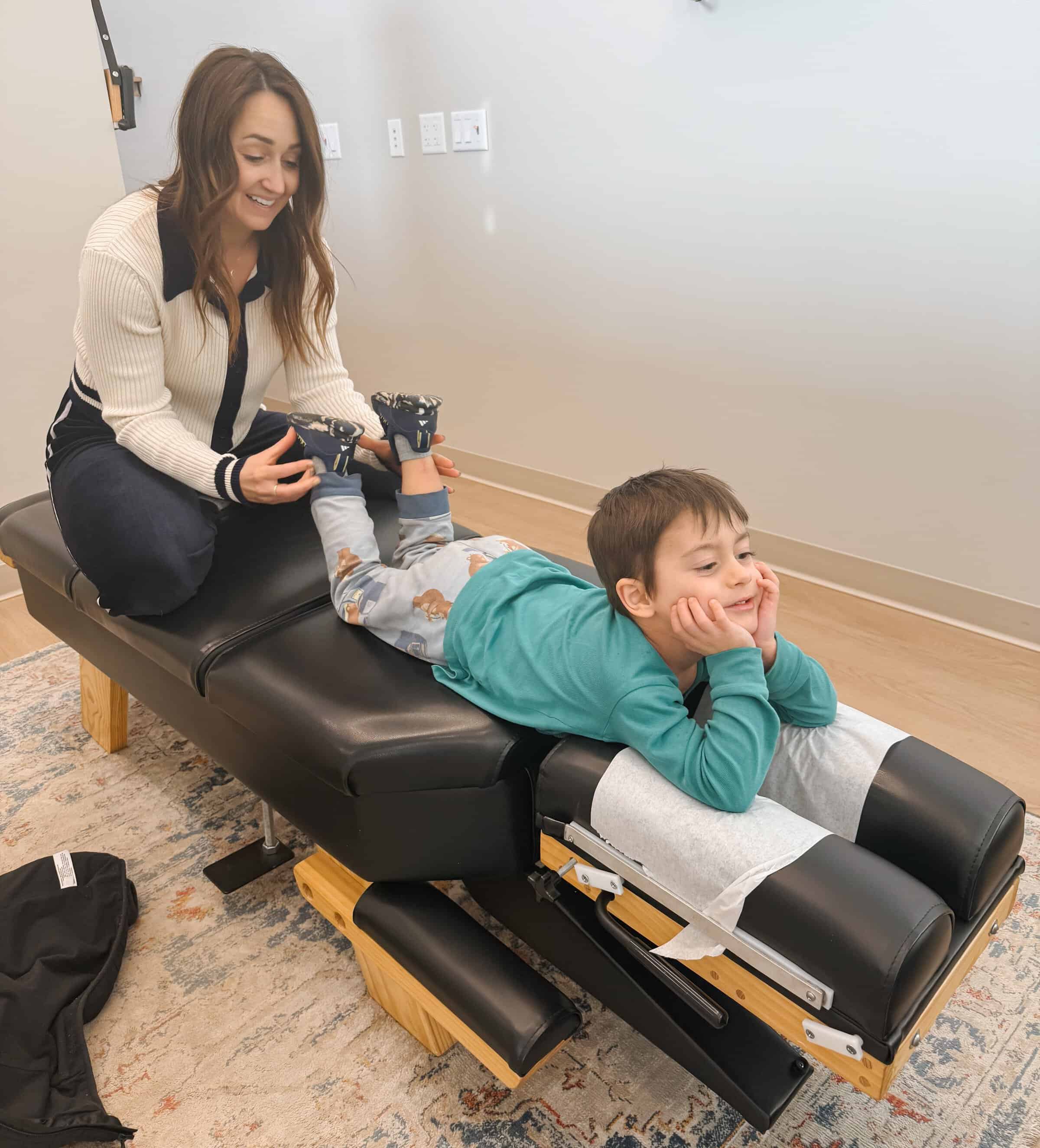
Through gentle, specific adjustments, we help the nervous system shift out of fight-or-flight and into a more regulated, restorative state.
For babies and children, these adjustments are incredibly gentle—far more gentle than most parents expect.
The goal is not to force the body to sleep.
The goal is to help the nervous system finally feel safe enough to rest.
The INSiGHT Scan Difference
One of the things that makes our approach different is that we don’t guess.
We use INSiGHT Scans to look at how your child’s nervous system is functioning and where it may be stuck in stress patterns.
These scans help us see:
how much stress the nervous system is under,
whether your child is stuck in sympathetic dominance,
how well their system is adapting,
and where regulation may be breaking down.
For families who have felt dismissed, told to “just wait it out,” or left trying one sleep trick after another, this can be a huge turning point.
Because finally, there is a way to look deeper.
And when we begin to improve nervous system regulation, parents often notice that sleep is one of the first things to shift.
When Sleep Improves, Everything Else Often Does Too
This is what we love helping families understand:
Sleep is rarely just about sleep.
When a child begins sleeping better, parents often notice other changes too.
They may see:
better mood,
fewer meltdowns,
improved focus,
better digestion,
fewer immune challenges,
more energy during the day,
and a child who just seems more settled, calm, and connected.
That’s because once the nervous system starts regulating better, everything else can begin to follow.
Sleep is foundational.
And when you restore the body’s ability to rest, you support its ability to heal.
Your Child Is Not Broken
If your child struggles with sleep, please hear this:
Your child is not broken.
You are not failing.
And this is not “just a phase” for every family.
Your child’s body may be doing the best it can with a nervous system that is stuck in stress and survival mode.
That exhausted, restless, dysregulated pattern is real.
And it deserves more than another suggestion to try a different bedtime routine.
If you’ve already tried the usual things and your child still can’t settle, still wakes constantly, or still never seems rested, it may be time to stop looking only at sleep habits—and start looking at the nervous system.
Because when the nervous system is finally supported the right way, the body can begin to do what it was designed to do:
Rest.
Repair.
Grow.
Heal.
Ready to Get to the Root Cause?
If your child has been struggling with sleep, meltdowns, focus, immune challenges, or that constant tired-but-wired pattern, we’d love to help you look deeper.
At Foundations Chiropractic, we use gentle, neurologically-focused care and INSiGHT Scans to help families understand what’s really going on beneath the surface.
You don’t have to keep guessing.
And your child doesn’t have to stay stuck.
Their nervous system has been trying to heal all along.
It may just need the right support to finally get there.