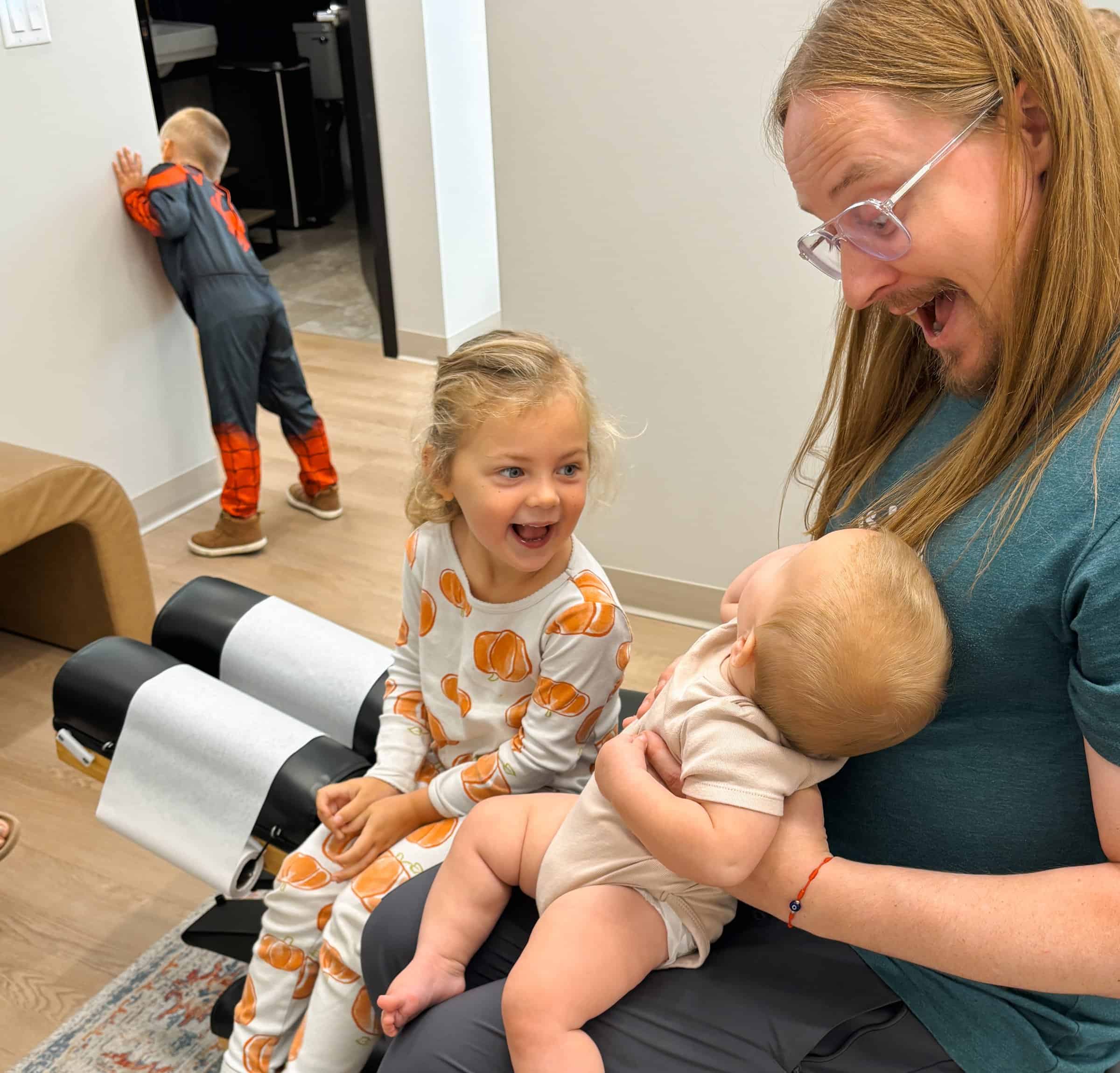
Meet Aria—a sweet little girl who, not long ago, was deeply overwhelmed by her world. According to her parents, she was often sad, withdrawn, and inconsolable in unfamiliar places. Simple outings would end in full-on meltdowns. Her nervous system wasn’t just sensitive—it was overloaded.
And Aria isn’t alone.
Today, 1 in 6 children struggles with sensory processing challenges. Yet most parents are told, “It’s just a phase—they’ll grow out of it.” But what if they don’t? What if early signs of distress are actually the nervous system waving a red flag?
At Foundations Chiropractic, we believe parents deserve real answers—not a wait-and-see approach.
What Is Sensory Processing Disorder?
Sensory Processing Disorder (SPD) occurs when the brain has trouble receiving, organizing, or responding to input from the senses—like sound, light, touch, and movement. For a child with SPD, everyday environments can feel chaotic and overwhelming.
Imagine walking into a crowded, noisy carnival—bright lights flashing, music blaring, smells everywhere, people bumping into you from all directions. That’s how an ordinary classroom, grocery store, or family gathering can feel for a child with sensory challenges.
SPD can affect any of the senses:
- Auditory: sensitivity to noise or loud environments
- Visual: overwhelmed by bright or flickering lights
- Olfactory: intense reaction to smells
- Gustatory: picky eating, aversions to textures
- Tactile: clothing tags or unexpected touch can trigger distress
- Vestibular: poor balance and coordination
- Proprioceptive (body awareness): trouble sensing limbs or craving pressure like tight hugs
Out of all of them, proprioception—the body’s ability to know where it is in space—is foundational to development and brain function.
While sensory challenges often coexist with conditions like autism, SPD is not the same thing. Many children with SPD hit milestones “on time” yet still struggle immensely with behavior, attention, sleep, or emotional regulation.
The Real Signs of Sensory Struggles
Most kids have quirks—certain textures they don’t like or sounds that bother them. But if your child is constantly overwhelmed or constantly seeking input, it could point to a deeper neurological issue.
Signs of Oversensitivity (Hypersensitivity):
- Easily upset by bright lights or loud noises
- Dislikes being touched or startled
- Melts down in public or crowded settings
- Reacts strongly to smells, tags, or certain clothing
- Struggles with sleep, digestion, or immunity
Signs of Undersensitivity (Hyposensitivity):
- Constantly seeking sensory input—spinning, crashing, rough play
- Chews on clothes, hands, or objects
- Doesn’t seem to notice pain, noise, or smell
- Craves tight hugs or deep pressure
- Takes big physical risks on the playground
Many kids show a mix of both—one moment covering their ears, the next crashing into furniture.
Why It Matters: The Impact on Health, Development, and Family Life
Sensory dysfunction doesn’t just affect behavior. It can deeply disrupt a child’s health, learning, and relationships.
- Learning & Focus: Classrooms can feel overwhelming, affecting concentration and academic progress.
- Emotional Regulation: Frequent meltdowns can lead to anxiety, withdrawal, and low self-esteem.
- Social Development: Difficulty reading cues or connecting with others makes friendships tough.
- Family Dynamics: Daily life becomes unpredictable—meals, bedtime, and even playdates feel like battlegrounds.
- Developmental Delays: SPD often contributes to delays in speech, motor coordination, and cognitive skills.
What Causes Sensory Processing Issues?
While traditional healthcare rarely offers a clear cause, our Perfect Storm framework sheds light on what’s really going on.
It’s often not just one thing—but a build-up of stressors that start before birth and continue through the early years:
- High-stress pregnancy or birth trauma
- Interventions during labor and delivery
- Feeding issues, colic, or constipation
- Antibiotic use, food intolerances, and nutrient deficiencies
- Chronic illness or sleep disruption
These stressors over-activate the fight-or-flight system and suppress the calming, regulating functions of the parasympathetic nervous system. This imbalance—called dysautonomia—can cause the nervous system to become “stuck” in survival mode.
Subluxation, Dysautonomia, and the Vagus Nerve: The Missing Link
When the nervous system is constantly under stress, subluxations—areas of tension and dysfunction—begin to interfere with how the brain and body communicate.
The vagus nerve, which helps regulate digestion, sleep, mood, and social engagement, can become dysregulated—leaving a child overwhelmed, anxious, or disconnected.
Chiropractic adjustments work to:
- Release stuck tension in the sympathetic nervous system
- Activate the calming parasympathetic side (the “rest and regulate” system)
- Restore balance to sensory circuits and brain-body communication
Aria’s Story: From Meltdowns to Milestones
After starting neurologically-focused chiropractic care, Aria’s transformation was incredible.
She began sleeping better. Her speech blossomed. She no longer melted down in public. Instead of crying when someone said hello, she smiled—and said hello back.
Her nervous system was finally able to regulate, adapt, and connect.
How We Can Help
At Foundations Chiropractic, we use INSiGHT Scans to evaluate exactly how your child’s nervous system is functioning. These scans give us a clear picture of subluxation, dysautonomia, and vagus nerve function—so we can create a customized care plan that addresses the root of the issue.
You don’t have to walk this road alone. Whether you’re just beginning to ask questions or have been working with amazing OTs and PTs already, chiropractic care may be the missing piece that helps everything click into place.
With the right support, your child can experience:
- Improved regulation and focus
- Better sleep, digestion, and immunity
- Reduced meltdowns and anxiety
- Stronger social connections and learning
You Deserve Hope, Help, and Real Answers
Sensory challenges shouldn’t define your child’s future—or your family’s day-to-day life.
Let’s get to the root. Let’s give your child’s nervous system the care and support it needs to thrive.
📍 Ready to take the next step? Contact Foundations Chiropractic to schedule your child’s INSiGHT Scans today.
Your child’s breakthrough starts here. 💙