If you’ve ever been told, “Don’t worry, they’ll grow out of it,” you’re not alone.
Colic. Reflux. Arching. Constipation. Stiffness. Endless crying that won’t stop no matter how much you rock, bounce, or sway.
Too often, these early red flags are dismissed as “normal baby stuff” — something you just have to wait out. But the truth is, most babies don’t grow out of colic… they grow into other challenges. Sleep struggles, sensory issues, food sensitivities, anxiety, frequent illnesses, and meltdowns often follow.
You may even be reading this thinking, “This is my child. They were colicky as a baby, and now we’re seeing anxiety or sensory challenges today.”
So let’s go deeper into what colic actually is, what causes it, and — most importantly — what you can do about it.
The Real Root of Colic (It’s Not Just Gas)
Most pediatricians still chalk up colic to immature digestion, gas buildup, or “just one of those phases.” And yes, the digestive system may be involved — but it’s not the starting point. The real root cause goes deeper. Much deeper.
Colic and digestive issues in babies are actually signs of a stressed and stuck nervous system. The system responsible for digestion, sleep, immune function, and regulation — the autonomic nervous system — is likely out of balance. It’s working overtime, trying to keep things moving when everything feels jammed up.
That’s why prune juice and probiotics may help a little, but never fully solve the problem. Because the issue didn’t start in the tummy — it started in the brain and nervous system.
Colic, Reflux & Constipation = A Nervous System Under Stress
Here’s the deal: your baby’s entire digestive tract — from the esophagus to the stomach and intestines — is controlled by the nervous system. More specifically, by the vagus nerve, a major communication superhighway that tells the digestive system how to work.
When that vagus nerve gets overwhelmed, digestion slows down. Tension builds up. Babies can’t break down nutrients properly. Waste doesn’t move out efficiently. And that leads to pain, inflammation, and discomfort — which shows up as crying, arching, reflux, and constipation.
So the big question is: What caused that stress on their nervous system in the first place?
It All Starts Before Birth: Pregnancy + Birth Trauma
Let’s rewind.
The earliest signs of stress on a baby’s nervous system begin during pregnancy. If mama was under a lot of physical or emotional stress during pregnancy — whether due to anxiety, physical strain, or lack of support — that stress gets passed directly to baby. After all, mom’s nervous system is baby’s nervous system in utero.
Then comes birth. And for so many babies, this is where everything shifts. C-sections, inductions, vacuum/forceps use, or long labors often create significant stress on a newborn’s neck and nervous system. This is called birth trauma, and it’s one of the most overlooked causes of colic and early health challenges.
That tension tends to “get stuck” in the neck and mid-back — the exact places we see babies arch, stiffen, and squirm. These aren’t random movements. They’re signals. Your baby is trying to tell you where the problem is.
Colic Isn’t Just a Phase — It’s the Start of the “Perfect Storm”
When we don’t address this early stress, it can snowball.
We often see babies who had colic grow into toddlers with ear infections, congestion, eczema, and immune challenges. Later, they may struggle with anxiety, ADHD, sensory processing disorders, or chronic meltdowns.
This pattern — where one issue leads to another — is what we call the Perfect Storm. It’s a neurological storm that starts early, and unless the stress is released from the nervous system, it keeps building.
The good news? There’s a way to break the cycle.
Why Pediatric Chiropractic Works
Pediatric chiropractic is uniquely designed to do one thing: locate and release the tension that’s stuck in your child’s nervous system.
And when that stress is released? The digestive system turns back on. The vagus nerve gets to work. Babies calm, sleep better, poop more regularly, nurse more easily, and feel more at peace.
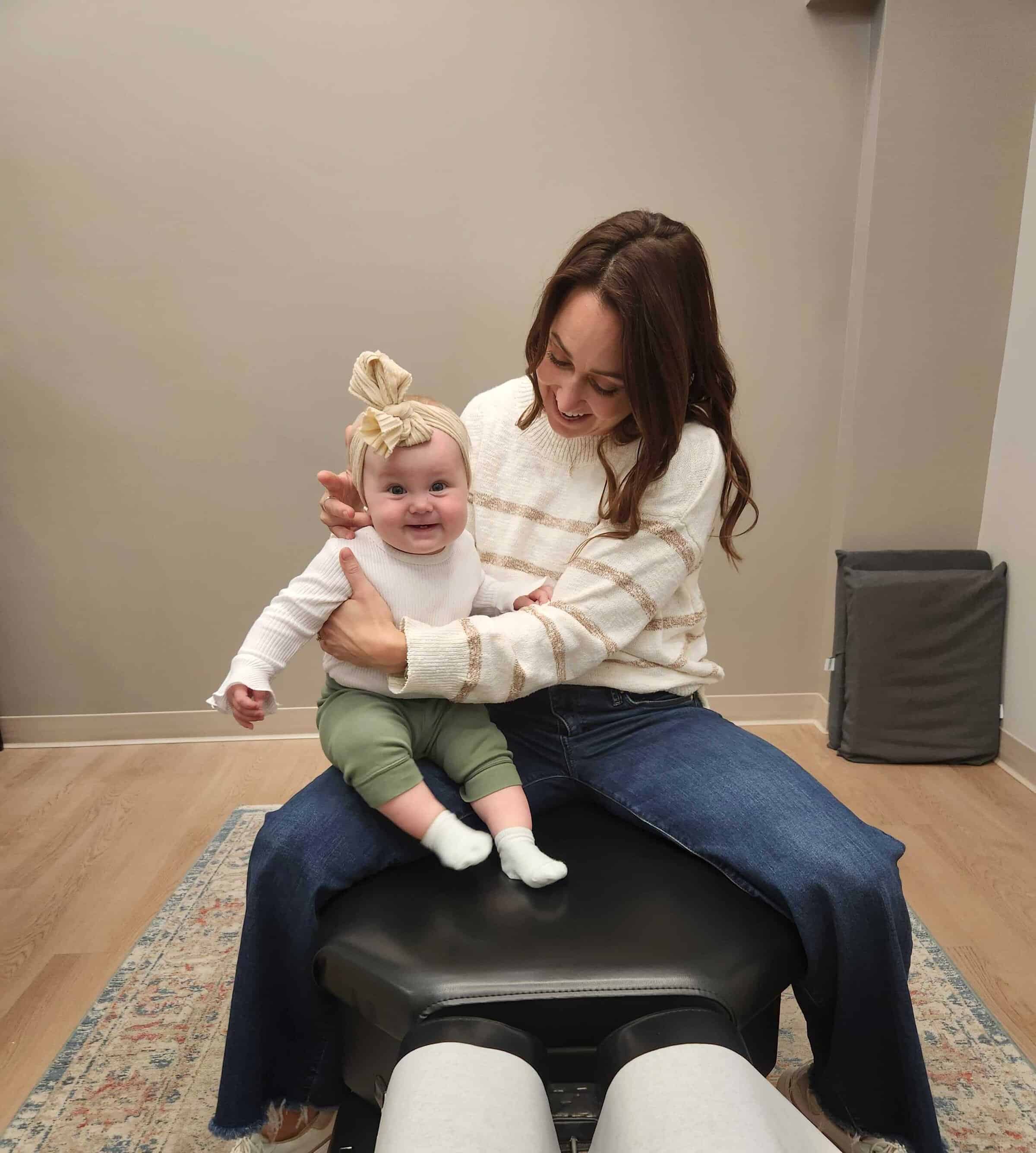
These adjustments are gentle, specific, and perfectly safe for infants — often using no more pressure than you’d use to check a ripe avocado. It’s one of the most powerful things you can do to support your baby’s health early on.
But here’s the key: you need a trained, neurologically focused pediatric chiropractor who understands how to find the stress, track it through your child’s story, and release it safely and effectively.
No, They Don’t Just Grow Out of It
You deserve to know the truth. Most babies don’t grow out of colic.
Because the same stress that causes colic also affects motor development, immune function, emotional regulation, and so much more. If that stress stays stuck in the system, your child may grow into bigger, more chronic health challenges.
But if we intervene early — if we get to the root of the root — we can help your child heal and thrive the way they were designed to.
That’s what we do every day at Foundations Chiropractic. And that’s why we’ll never stop fighting to get this message into the hands of more families.
What To Do Next
If your little one is colicky, struggling with reflux, or having a hard time getting into rhythm — or if your older child fits the “Perfect Storm” pattern and had colic as a baby — you are not alone and there is hope.
✨ We’d love to support your family at Foundations Chiropractic — where we believe every child deserves a fully functioning nervous system, and every parent deserves answers.
💛 Your story matters. Your instincts are spot on. Let’s help your child heal, naturally.