Few things are harder for parents than watching their child struggle with chronic constipation.
The stomach pain.
The frustration.
The constant cycle of trying something new, hoping this will finally be the thing that helps.
For many families, the first solution recommended is Miralax.
That’s exactly what happened for Laura and her son, Justin.
Justin had struggled with constipation since infancy. After months of discomfort and irregular bowel movements, his pediatrician recommended Miralax. At first it seemed like the logical next step.
But shortly after starting it, Laura began noticing changes she wasn’t expecting.
Justin became more emotional.
His behavior shifted.
He seemed more anxious and dysregulated.
Laura remembers thinking, “Why didn’t anyone tell me this could happen?”
Stories like Justin’s are becoming more common as parents begin asking deeper questions about constipation medications and the root causes behind digestive struggles in children.
How Common Is Constipation in Kids?
Constipation is one of the most common health challenges children experience today.
In fact, research suggests up to 30% of children worldwide struggle with constipation at some point.
When a child cannot have regular bowel movements, parents often notice symptoms such as:
-
Stomach pain
-
Bloating
-
Hard stools
-
Straining during bowel movements
-
Skipping several days between bowel movements
-
Behavioral changes or irritability
Because constipation can be so uncomfortable, many pediatricians turn to laxatives like Miralax as a first-line treatment.
But for many families, this approach raises an important question:
Is treating constipation the same as fixing it?
What Is Miralax?
Miralax is an over-the-counter laxative commonly used to treat occasional constipation.
Its active ingredient is polyethylene glycol 3350 (PEG 3350).
This compound works by pulling water into the intestines. The additional water softens the stool and makes it easier to pass.
Unlike other medications, Miralax is designed to pass through the digestive system without being absorbed into the bloodstream.
In simple terms, Miralax doesn’t actually improve how digestion works — it simply forces more water into the stool so it moves through the system more easily.
While this can create short-term relief, it doesn’t address why the digestive system wasn’t working properly in the first place.
Why Miralax for Children Is Controversial
Many parents are surprised to learn that Miralax is not FDA-approved for use in children under 17.
Yet it is still commonly recommended by pediatricians as an “off-label” treatment for childhood constipation.
Over the years, the FDA has received reports of potential side effects in children using polyethylene glycol, including behavioral and emotional changes.
Parents have reported symptoms such as:
-
Anxiety
-
Mood swings
-
Aggression
-
Obsessive behaviors
-
Increased emotional dysregulation
While research has not confirmed a direct cause-and-effect relationship, these reports have raised important questions about long-term use in children.
And for many parents, the bigger concern becomes this:
If constipation keeps coming back when the medication stops, something deeper may be going on.
The Real Question Parents Should Be Asking
Most conventional treatments focus on moving stool through the body.
But healthy digestion depends on much more than stool consistency.
Your child’s digestive system relies on:
-
Nerve signals
-
Muscle contractions in the intestines
-
Proper hydration balance
-
Gut bacteria balance
-
Coordination between the brain and gut
All of these functions are controlled by one system in the body.
The nervous system.
The Gut–Brain Connection
Your child’s brain and digestive system are in constant communication.
The vagus nerve, one of the largest nerves in the body, plays a huge role in this connection. It helps regulate digestion, gut motility, and inflammation.
When the nervous system is balanced, digestion flows naturally.
Food moves through the digestive tract efficiently, muscles contract rhythmically, and bowel movements occur regularly.
But when the nervous system becomes stressed or dysregulated, digestion can slow down.
And that’s when constipation often begins.
Why Some Kids Struggle With Chronic Constipation
At Foundations Chiropractic, we often see constipation develop as part of what we call The Perfect Storm.
Instead of one single cause, several stressors combine to overwhelm a child’s nervous system.
Some common contributors include:
-
Stress during pregnancy
-
Birth interventions such as C-section, forceps, or vacuum delivery
-
Early antibiotic exposure
-
Gut microbiome disruption
-
Environmental toxins
-
Chronic nervous system stress
Over time, these stressors can push the body into sympathetic dominance — also known as “fight-or-flight” mode.
When the body stays stuck in this stress state, digestion slows dramatically.
That’s because digestion requires the opposite state of the nervous system.
Rest, regulate, and repair.
If the body never fully shifts into that state, bowel motility decreases and constipation develops.
Why Constipation Often Comes With Behavior Changes
Many parents notice something interesting when their child struggles with constipation.
Behavior changes too.
They may become:
-
More emotional
-
More anxious
-
Easily overwhelmed
-
Prone to meltdowns
That’s because the same nervous system imbalance affecting digestion can also affect emotional regulation.
When the nervous system is stuck in fight-or-flight, the body is constantly on edge.
Digestion slows.
Sleep can become disrupted.
Behavior becomes more reactive.
This is why addressing constipation often requires looking beyond the gut.
A Root-Cause Approach to Pediatric Constipation
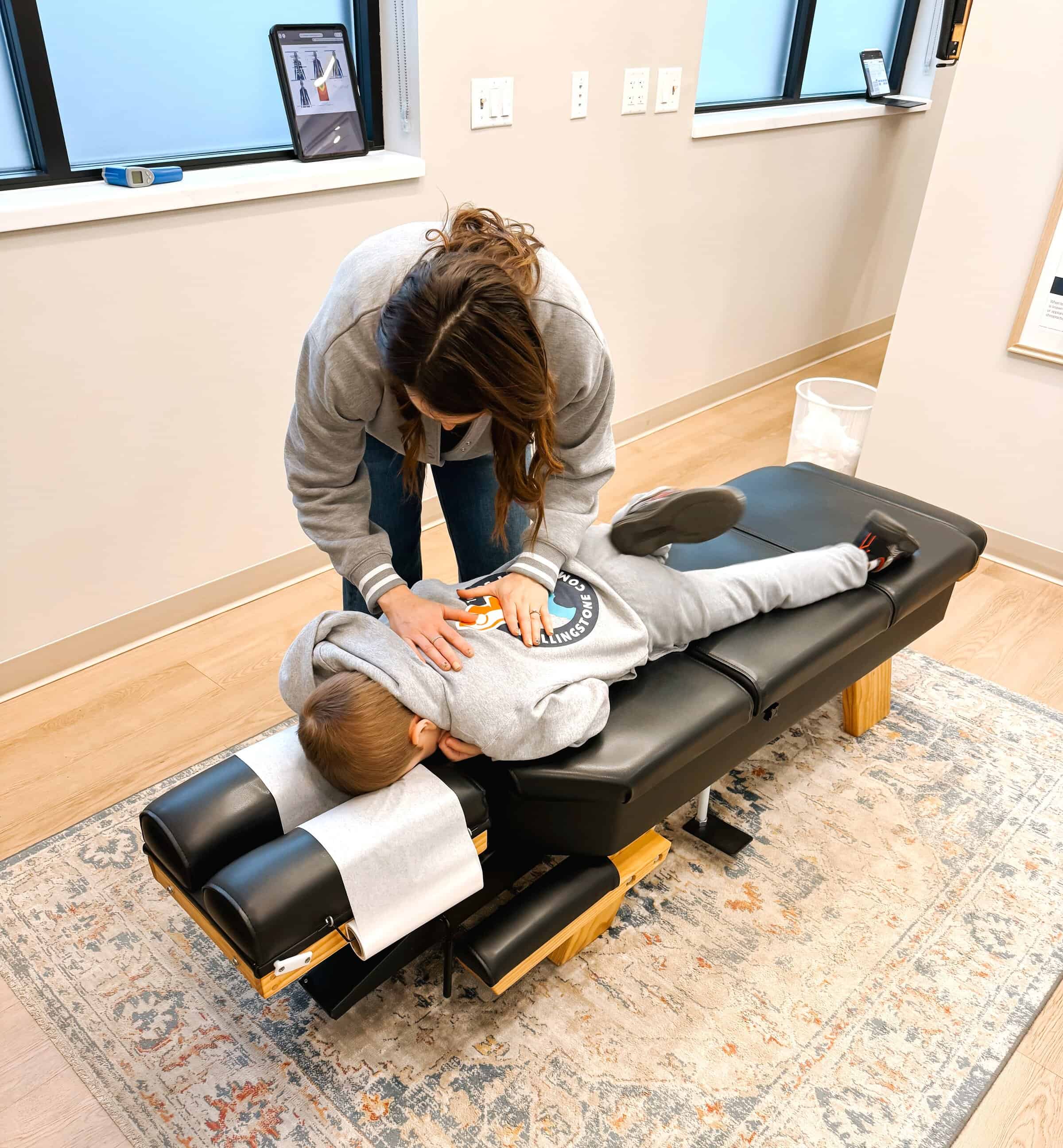
At Foundations Chiropractic, we take a neurologically-focused approach to digestive health.
Instead of simply trying to force bowel movements, we focus on restoring balance to the nervous system so the body can function the way it was designed to.
One of the tools we use to do this is called INSiGHT Scans.
These non-invasive scans help us measure how the nervous system is functioning and identify areas where stress may be interfering with brain-body communication.
The scans evaluate things like:
-
Heart rate variability (HRV)
-
Neuromuscular tension
-
Nervous system regulation
From there, we can create a personalized care plan designed to reduce nervous system stress and support proper digestion.
Justin’s Story
When Justin first came into the office, his family had tried everything.
Diet changes.
Supplements.
Medications.
But his constipation kept returning.
His INSiGHT scans revealed significant nervous system stress and signs of sympathetic dominance — meaning his body was stuck in fight-or-flight mode.
Through gentle neurologically-focused chiropractic care, Justin’s nervous system began shifting out of stress mode.
Over time his digestion began improving.
His stomach pain eased.
His bowel movements became more regular.
His behavior improved as well.
Justin’s story is one example of what can happen when we address the root cause instead of simply managing symptoms.
Supporting Healthy Digestion Naturally
Along with addressing nervous system stress, there are several lifestyle factors that support healthy digestion in children.
These include:
-
Drinking enough water
-
Eating whole, fiber-rich foods
-
Getting daily movement and exercise
-
Supporting gut health
-
Creating calm, predictable routines
When these factors work together, the digestive system can function much more efficiently.
When to Look Deeper
If your child struggles with:
-
Chronic constipation
-
Recurring stomach pain
-
Behavioral changes related to digestion
-
Dependence on laxatives
…it may be time to look deeper at what’s driving those symptoms.
Because constipation is rarely just a digestive problem.
More often, it’s a signal from the body that the nervous system needs support.
Helping Kids Heal From the Inside Out
At Foundations Chiropractic, our mission is simple:
To help families uncover the root cause behind their child’s health challenges.
When we support the nervous system first, many systems in the body begin functioning better — including digestion.
And that means fewer medications, fewer symptoms, and more freedom for kids to grow, play, and thrive.
If your child has been struggling with constipation and you feel like you’ve tried everything, know that there may still be a missing piece of the puzzle.
And that piece might just be the nervous system.