As a society, we talk a lot about pregnancy—but most of the conversation centers around the stuff.
Pregnancy announcements.
Baby showers.
Nursery themes.
Must-have gear lists.
And honestly? That part is fun and exciting.
But what often gets overlooked is the marathon itself: birth.
How do we actually prepare for birth day—not just physically, but neurologically?
Because birth doesn’t begin on the delivery day.
Birth begins months earlier—inside the nervous system.
Prenatal Stress Isn’t Just “In Your Head”
Let’s start with something that doesn’t get talked about nearly enough: prenatal stress.
Research shows that a mother’s nervous system state during pregnancy directly influences her baby’s developing nervous system—before birth ever happens. Stress from work, relationships, finances, sleep deprivation, or even the pressure to “do pregnancy perfectly” doesn’t stay contained within mom’s body.
It’s biologically shared.
This is because there is a deep neurological connection between mother and baby. Your nervous system is essentially acting as the environment your baby is developing within.
And when that environment is chronically stressed, your baby’s nervous system adapts to stress as its baseline.
This isn’t about blame.
This is about understanding the biology—and realizing that with the right tools, we can do something about it.
How Stress Hormones Affect Your Baby’s Nervous System
When you experience stress, your body releases cortisol—your primary stress hormone.
In small, short-term doses, cortisol is helpful. It sharpens focus and mobilizes energy. But when stress becomes chronic, cortisol stays elevated.
Here’s the key part most parents never hear:
Cortisol crosses the placenta.
That means your baby’s developing brain is exposed to the same stress chemistry your body is producing.
This exposure influences development in very specific ways:
-
The HPA axis (your baby’s stress response system) is programmed in utero. High cortisol exposure teaches the nervous system to stay on high alert—strong gas pedal, weak brake.
-
Brain structures involved in emotional regulation can be altered. Research shows changes in the amygdala (fear center) and hippocampus (memory and emotional processing).
-
Vagus nerve development can be compromised, affecting digestion, feeding, calming, and self-regulation after birth.
This isn’t about the occasional stressful day.
This is about the kind of stress your nervous system can’t fully recover from—the kind that sits in your chest, disrupts sleep, and never quite turns off.
What “Nervous System Regulation” Actually Means
Your Autonomic Nervous System controls everything you don’t consciously think about: breathing, digestion, heart rate, immune response, sleep, and stress reactions.
It has two main branches:
-
The Sympathetic Nervous System (the gas pedal): activation, movement, action
-
The Parasympathetic Nervous System (the brake pedal): rest, digestion, healing, regulation
In a healthy system, you move fluidly between the two.
But chronic stress keeps the gas pedal pressed down. Over time, the brake pedal weakens. This state—often called sympathetic dominance or dysautonomia—becomes the nervous system’s default.
And when your baby is developing inside that system, they learn that pattern too.
Birth Is a Neurological Event First
Birth isn’t just physical—it’s neurological.
Labor begins in a parasympathetic-dominant state. Oxytocin—the hormone responsible for initiating and sustaining labor—is released most effectively when the mother feels safe, supported, and regulated.
This calm baseline allows:
-
Cervical softening
-
Rhythmic contractions
-
Pain modulation
-
Efficient hormonal coordination
This is why “natural labor starters” only work when the nervous system feels safe. No amount of dates, teas, curb walking, or spicy food can override a nervous system stuck in survival mode.
As labor progresses, the nervous system must shift gears.
The sympathetic system comes online at the right time to support pushing—providing strength, coordination, and focused effort. After birth, both mom and baby transition back into parasympathetic dominance, supporting bonding, breastfeeding, temperature regulation, and healing.
When this sequence flows properly, birth works with the body instead of against it.
What Happens When the Nervous System Is Dysregulated in Birth
When a mother does not feel safe—due to bright lights, loud environments, constant interruptions, unfamiliar staff, or unresolved trauma—the sympathetic system can turn on too early.
This disrupts oxytocin release, slows labor, increases pain perception, and raises the likelihood of interventions.
And the baby feels it too.
A newborn’s first regulation comes through co-regulation—skin-to-skin contact, warmth, heartbeat, breath, and feeding. When this loop is interrupted, babies show measurable signs of nervous system stress: elevated heart rate, lower HRV, difficulty stabilizing temperature and glucose levels.
Our goal is not to control birth.
Our goal is to enter birth with a nervous system that is resilient, adaptable, and regulated—able to shift states without getting stuck.
What the Research Shows About Prenatal Stress
Science consistently supports what we see clinically.
-
Infants born to highly stressed mothers show significantly higher stress reactivity.
-
Heart Rate Variability research shows lower parasympathetic activity at birth in babies exposed to chronic prenatal stress.
-
Long-term outcomes linked to high prenatal stress include anxiety, ADHD, emotional dysregulation, and altered brain development.
What’s most important?
It’s not just the stressor—it’s how well the nervous system can process and recover from stress.
Why This Is Missing From Conventional Prenatal Care
Standard prenatal care does essential work: monitoring growth, screening for complications, tracking milestones.
What’s missing isn’t intention—it’s scope.
There is typically:
-
No assessment of maternal nervous system function
-
No measurement of stress impact on fetal neurological development
-
No intervention to improve regulation during pregnancy
That’s where Neurologically-Focused Chiropractic Care comes in.
Measuring What Matters: INSiGHT Scans
INSiGHT Scans allow us to objectively assess nervous system function through three advanced technologies:
-
Thermal Scans show autonomic balance—whether your nervous system is stuck in fight-or-flight or able to access calm regulation.
-
Surface EMG reveals patterns of stored tension—where stress is physically held in the body.
-
Heart Rate Variability (HRV) measures adaptability and vagal tone—your nervous system’s ability to respond and recover.
In practice, we consistently see moms move from stressed, depleted patterns into regulated, resilient ones. Sleep improves. Energy returns. Emotional balance stabilizes.
And then they have their baby.
When newborns are scanned, their nervous systems often reflect their mother’s regulation. This is co-regulation in action. A regulated nervous system teaches another nervous system how to develop.
Your Next Step
Your baby’s nervous system is being shaped right now.
Earlier support is always better—but it is never too late to begin.
Start with INSiGHT Scans.
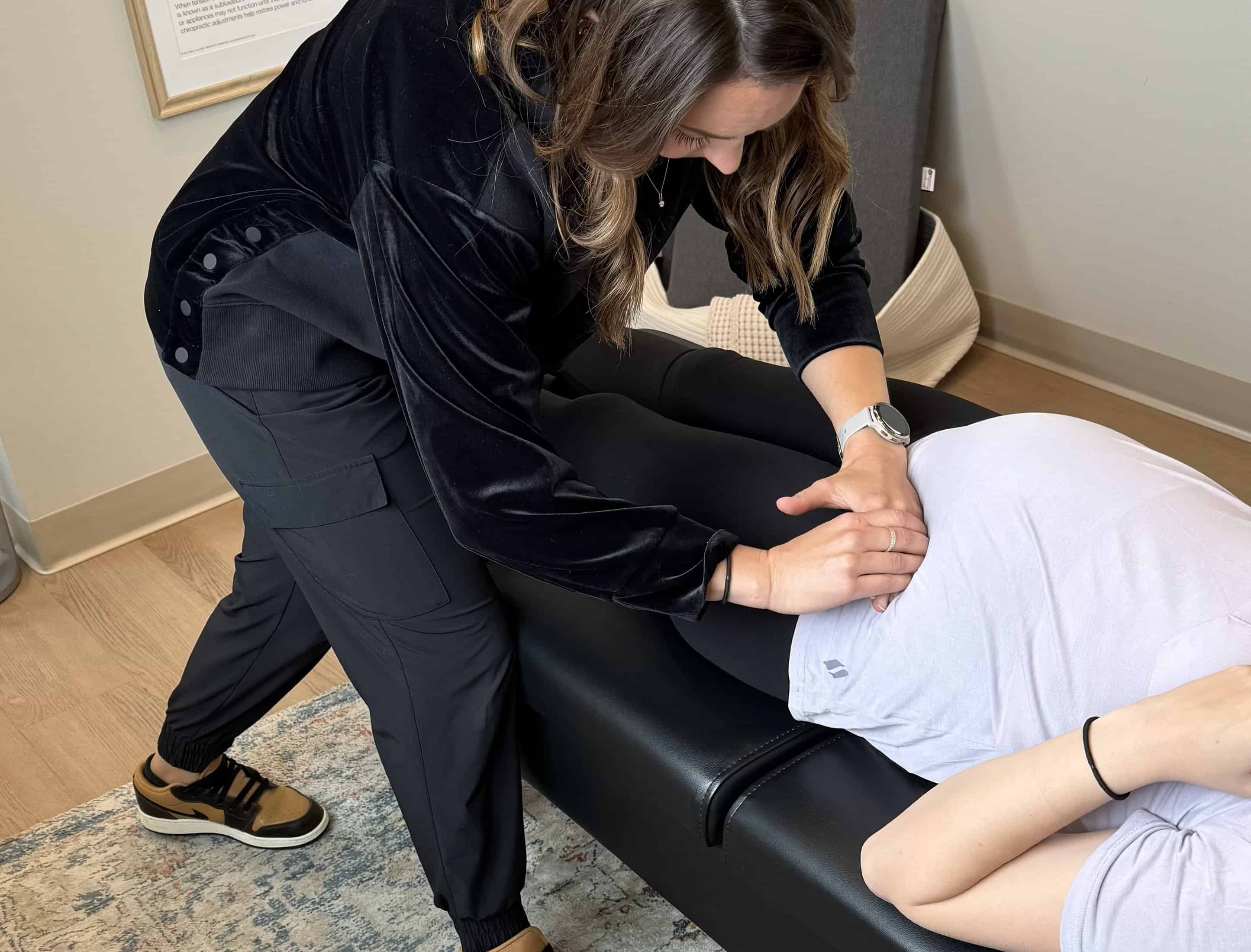
Support your nervous system with gentle, Neurologically-Focused adjustments.
Track progress through re-scans and objective data.
At Foundations Chiropractic, our mission is to support healthy nervous system development from the very beginning—so babies aren’t born already stuck in stress mode.
When the nervous system is supported first, everything else works better.
📞 Call our office or visit our website to schedule your INSiGHT Scans and take the next step in supporting both you and your baby—before birth ever begins.