There’s nothing quite like the moment two little pink lines appear on that pregnancy test.
Excitement. Overwhelm. Joy. Fear. Hope.
It’s hard to even put into words how much emotion floods a parent’s heart in those first few moments. And it’s even harder to wrap our minds around how two microscopic cells—joined at just the right time—can, in less than 10 months, form a tiny human with a beating heart, blinking eyes, a digestive system, and even teeny-tiny eyelashes.
And what’s even more miraculous?
Every organ, limb, reflex, and function develops under the direction of one powerhouse system: the nervous system. From the moment of conception, it’s the nervous system that choreographs this entire development process—like a conductor leading a beautiful, intricate symphony.
In this post, we’re going to unpack how fetal development truly works—and why the vagus nerve and autonomic nervous system (ANS) are the unsung heroes behind a healthy pregnancy and a thriving baby.
Fetal Development 101: Let’s Talk About the Real MVP
You might remember from biology class that fetal development starts with a fertilized egg, or zygote, and progresses through stages like blastocyst, embryo, and fetus. But what’s often left out of textbooks is the fact that neurological development starts first—and drives everything else.
Here’s how it breaks down:
- First layer to develop: Brain + nervous system
- Second layer: Organs like the lungs, stomach, and liver
- Third layer: Muscles, bones, and skin
This sequence alone tells us everything: when the nervous system is functioning well, everything else has a chance to thrive. But if that system is stressed or dysregulated, it can throw off everything from immune function to digestion to emotional regulation—even before your baby is born.
The Mother-Baby Connection: Why Your Nervous System Sets the Stage
Here’s something many OBs and pediatricians never mention—your nervous system and your baby’s are deeply connected from day one.
The umbilical cord doesn’t just carry blood and nutrients—it’s also like an electrical extension cord, linking your baby’s developing nervous system to yours. So when you’re constantly in “fight or flight” mode due to stress, anxiety, or overwhelm, your baby feels that, too.
Research shows that maternal distress (emotional trauma, chronic stress, grief, toxic relationships, high-pressure jobs, etc.) can impact your child’s neurological development long before birth—and lead to issues like colic, sleep struggles, sensory sensitivities, developmental delays, and even anxiety or ADHD later in life.
This is why regulating mom’s nervous system isn’t just “self-care”—it’s essential prenatal care.
The Vagus Nerve + Autonomic Nervous System (ANS): Your Baby’s Built-In Regulation System
The vagus nerve is the longest cranial nerve in the body and plays a central role in regulating nearly every function essential to development:
- Digestion
- Heart rate + blood pressure
- Immune system activation
- Emotional regulation
- Inflammation control
- Social + sensory processing
And it starts forming as early as 3–4 weeks gestation—before most parents even know they’re pregnant.
From Weeks 4 through 40, the autonomic nervous system goes through rapid, intricate development that sets the stage for lifelong health. Here’s a quick look at just a few major milestones:
- 4–8 weeks: Cranial nerve development
- 10 weeks: Enteric nervous system (gut-brain connection)
- 13 weeks: Increased susceptibility to maternal stress
- 26 weeks: Myelination (maturation) of the vagus nerve
- 37–40 weeks: Final connections for body temperature, inflammation control, and post-birth adaptation
By full term, your baby’s vagus nerve is hard at work regulating everything from immune function to emotional resilience.
How Maternal Stress Derails Neurological Development
Let’s be real—stress is unavoidable. But it’s the chronic, never-ending kind of stress that’s the problem.
When mom’s nervous system stays stuck in sympathetic overdrive (“fight or flight”), it leads to something called subluxation—a neurological interference that disrupts proper vagus nerve function and overall regulation.
This sets off a chain reaction:
- Subluxation → Dysautonomia (nervous system imbalance)
- Dysautonomia → Developmental Interference
- Interference → Future Challenges (sleep issues, colic, immune struggles, sensory processing, behavior concerns)
And the toughest part? These challenges often don’t show up until months—or even years—later.
The Game-Changer: Heart Rate Variability (HRV) + INSiGHT Scans
Here’s the good news.
You don’t have to wait until your child is struggling to do something about it. You can track and optimize your nervous system health during pregnancy.
That’s where HRV comes in.
Heart Rate Variability is one of the most accurate ways to measure how balanced and adaptable your nervous system is—and it’s a key part of the INSiGHT Scans we use at Foundations Chiropractic. These scans give us a real-time look at how your body is handling stress and how it’s influencing your baby’s development.
Here’s what we measure:
- Sympathetic vs. parasympathetic balance
- Vagal tone + adaptability
- Subluxation and neurological interference
- Your body’s “battery charge” + energy reserves
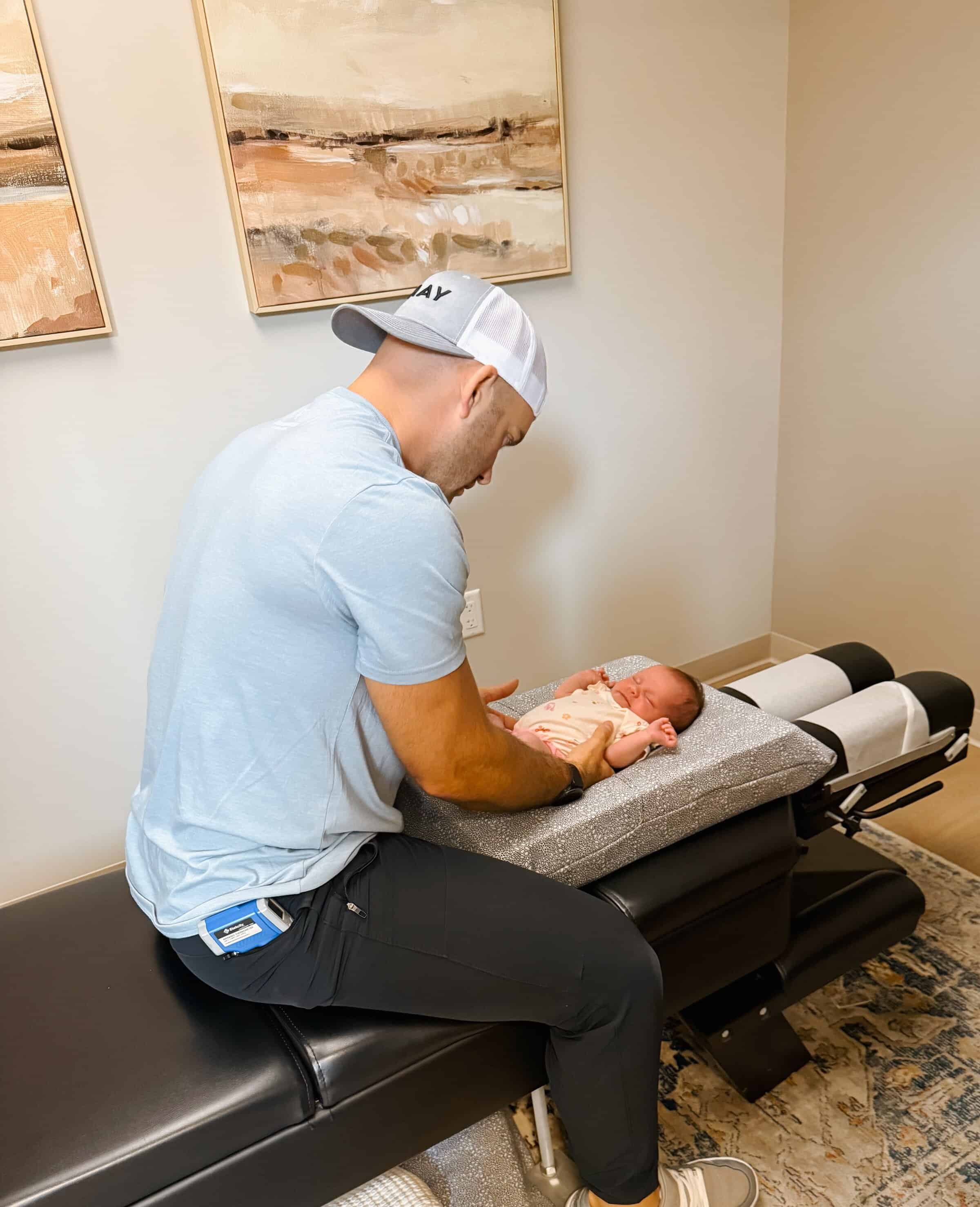
And yes—these same scans can be used to measure your baby’s HRV and vagus nerve function just days after birth.
Real-Life Example: How HRV Changed the Game for One Expecting Mom
A mom came into our office in her first trimester, exhausted and overwhelmed. Her initial HRV scan showed a nervous system stuck in overdrive—wired and tired, with very little energy left in the tank.
After 12 neurologically-focused adjustments, her follow-up scan showed a nervous system that was recharging, adapting, and functioning better than it had in months. She was sleeping better, feeling more emotionally regulated, and felt fully prepared—body and mind—to welcome her baby into the world.
Her baby’s HRV scan a few weeks after birth? Also amazing.
You Are the Boss of Your Birth + Baby’s Future Health
You’ve likely been told that pregnancy requires constant ultrasounds, lab work, and screenings to check for risks and problems.
But what if you had a proactive way to measure health, not just disease?
What if we flipped the script—and instead of fear, you were given tools, confidence, and support?
Here at Foundations Chiropractic, we’re all about helping you feel empowered—not overwhelmed. Our INSiGHT Scans and HRV technology allow us to build personalized prenatal care plans that restore nervous system balance and support the development of a calm, resilient, thriving baby.
Because when your nervous system is strong, your baby’s can be, too.
Ready to Take the Next Step?
If you’re an expecting mom who…
- Feels more stressed than supported
- Wants to prepare for a smooth birth + postpartum
- Is ready to give your baby the best possible start
- Wants to feel seen, heard, and empowered…
Then it’s time to add a Neurologically-Focused Prenatal Chiropractor to your care team.
✨ Schedule your in-depth consultation and INSiGHT HRV Scan today.
✨ Let’s partner together to support your nervous system and your baby’s development—before, during, and after birth.
You’re not alone in this journey. We’re here to walk with you every step of the way 💙