Some children and teens look “fine” on the outside.
But inside, their body feels like it is constantly working too hard.
Their heart races when they stand.
They feel dizzy, shaky, or faint.
They struggle with constipation, nausea, or stomach pain.
They are exhausted no matter how much they sleep.
They feel anxious, overwhelmed, or emotionally on edge.
They cannot regulate temperature well.
They struggle with brain fog, focus, sensory overload, or chronic fatigue.
And for parents, it can be incredibly frustrating.
You know something is wrong.
Your child knows something is wrong.
But the tests may come back normal.
The symptoms may be blamed on anxiety.
Or your family may be sent from specialist to specialist, with no one connecting the whole picture.
At Foundations Chiropractic, we believe many of these families are not dealing with a dozen separate issues.
They may be dealing with one overwhelmed system underneath it all:
The Autonomic Nervous System.
When this system becomes dysregulated, it can create a condition or pattern called dysautonomia.
And understanding dysautonomia can be a major missing piece for families searching for answers.
What Is Dysautonomia?
Dysautonomia is a dysfunction or imbalance within the Autonomic Nervous System.
The Autonomic Nervous System is the part of the nervous system that controls the things your body does automatically — without you having to think about them.
Things like:
-
Heart rate
-
Blood pressure
-
Digestion
-
Breathing patterns
-
Temperature regulation
-
Sweating
-
Immune response
-
Sleep-wake rhythms
-
Blood flow
-
Stress response
When this system is working well, the body adapts smoothly.
Your child stands up, and their heart rate and blood pressure adjust.
They eat a meal, and digestion turns on.
They get warm, and the body sweats to cool down.
They experience stress, and then their body returns to calm.
But when the Autonomic Nervous System is dysregulated, those automatic responses do not work as smoothly.
The body may overreact, underreact, or get stuck in stress mode.
That is dysautonomia.
The Gas Pedal and Brake Pedal
A simple way to understand the Autonomic Nervous System is to think about a gas pedal and a brake pedal.
The sympathetic nervous system is the gas pedal.
It helps the body respond to stress, danger, activity, and urgency. It increases heart rate, raises alertness, and prepares the body to take action.
The parasympathetic nervous system is the brake pedal.
It helps the body rest, digest, sleep, heal, regulate, recover, and feel safe.
Both systems are important.
A healthy nervous system can press the gas when needed and then apply the brake when it is time to calm down.
But many children with dysautonomia are stuck with the gas pedal pressed down.
Their body is living in a state of fight-or-flight.
And when the brake pedal is not working well, the body has a harder time resting, digesting, sleeping, focusing, healing, and regulating emotions.
This is why dysautonomia can show up in so many different ways.
It is not just a heart rate problem.
It is not just a digestion problem.
It is not just anxiety.
It is not just fatigue.
It is a regulation problem.
Why Dysautonomia Can Be So Hard to Recognize
Dysautonomia can be confusing because it affects multiple systems at once.
A child may have dizziness and constipation.
A teen may have fainting spells and anxiety.
Another child may struggle with fatigue, sensory overload, sleep issues, chronic illness, and brain fog.
Because these symptoms cross so many categories, families are often sent to multiple specialists.
Cardiology for heart rate.
GI for digestion.
Neurology for headaches, seizures, or fainting.
Allergy or immunology for immune issues.
Counseling for anxiety.
Therapy for sensory or developmental struggles.
Each provider may be looking at one system.
But dysautonomia asks us to zoom out and ask:
What system controls all of those systems?
The answer is the nervous system.
Common Signs of Dysautonomia in Children and Teens
Dysautonomia can look different from child to child, but common signs may include:
-
Dizziness or lightheadedness
-
Fainting or near-fainting
-
Rapid heart rate
-
Heart palpitations
-
Chest discomfort
-
Fatigue or weakness
-
Brain fog
-
Difficulty concentrating
-
Headaches or migraines
-
Nausea
-
Constipation or diarrhea
-
Bloating or digestive discomfort
-
Temperature sensitivity
-
Excessive sweating or trouble sweating
-
Exercise intolerance
-
Poor sleep
-
Anxiety or panic-like feelings
-
Sensory overwhelm
-
Emotional dysregulation
-
Trouble with transitions
-
Weakness, poor coordination, or motor challenges
Many families describe their child as tired and wired at the same time.
They are exhausted, but cannot fully rest.
Anxious, but not sure why.
Dizzy, but told everything looks normal.
Hungry, nauseous, constipated, overwhelmed, emotional, and fatigued — all at once.
That is the nervous system struggling to regulate.
What Is Orthostatic Intolerance?
One of the most common patterns connected to dysautonomia is orthostatic intolerance.
That simply means the body has a hard time tolerating being upright.
When a child stands up, the body is supposed to automatically adjust heart rate, blood pressure, and blood flow so the brain continues getting what it needs.
But when the Autonomic Nervous System is not coordinating well, blood may pool in the legs or lower body.
This can lead to:
-
Dizziness
-
Lightheadedness
-
Blurred vision
-
Feeling faint
-
Racing heart
-
Heavy or achy legs
-
Purple or mottled legs while standing
-
Needing to sit or lie down often
For some children, this pattern may be diagnosed as POTS, or Postural Orthostatic Tachycardia Syndrome.
POTS is one form of dysautonomia, but dysautonomia itself is broader. It can involve many different patterns of autonomic dysfunction.
The Role of the Vagus Nerve
One of the most important parts of the dysautonomia conversation is the vagus nerve.
The vagus nerve is a major part of the parasympathetic nervous system — the brake pedal.
It helps regulate:
-
Heart rate
-
Digestion
-
Breathing
-
Inflammation
-
Immune response
-
Emotional regulation
-
Social connection
-
Recovery after stress
When vagus nerve function is strong, the body has a better ability to calm, digest, sleep, regulate, and recover.
When vagus nerve function is under stress, the body may have a harder time applying the brake.
That can leave a child stuck in sympathetic overdrive — the fight-or-flight state.
This is why vagus nerve dysfunction can be connected to so many patterns parents are worried about: constipation, reflux, anxiety, sensory overload, poor sleep, immune challenges, dizziness, fatigue, emotional outbursts, and trouble recovering after stress.
The vagus nerve is one of the body’s major regulation pathways.
When it is overwhelmed, the whole child can feel overwhelmed.
Why Dysautonomia Is Often Connected to Other Conditions
Many children with dysautonomia also have other diagnoses or concerns.
These may include:
-
POTS
-
Anxiety
-
Sensory processing challenges
-
ADHD
-
Autism-related challenges
-
PANS or PANDAS
-
Seizure-related concerns
-
Constipation or digestive issues
-
Chronic fatigue
-
Ehlers-Danlos syndrome
-
Mast Cell Activation Syndrome
-
Autoimmune challenges
-
Post-viral symptoms
-
Long COVID symptoms
This does not mean all of these conditions are the same.
But they may share a common thread: nervous system dysregulation.
The Autonomic Nervous System helps coordinate so many functions that when it is overwhelmed, multiple areas of the body can struggle at the same time.
That is why a child may have digestive issues, anxiety, dizziness, brain fog, and sensory overload — and those things may not be random.
They may be connected through the nervous system.
What Can Contribute to Dysautonomia?
Dysautonomia can have many contributing factors.
Some children may have a genetic or connective tissue component. Others may develop symptoms after an illness, infection, concussion, immune challenge, or prolonged stress.
At Foundations Chiropractic, we also talk about The Perfect Storm — the layering of stressors that can overwhelm a developing nervous system over time.
For some children, that storm may include:
-
Prenatal stress
-
A difficult pregnancy
-
Birth stress or interventions
-
C-section, induction, vacuum extraction, or forceps
-
Early feeding struggles
-
Colic or reflux
-
Poor sleep from infancy
-
Chronic ear infections
-
Antibiotics or repeated medication use
-
Environmental stressors
-
Emotional stress
-
Illness or post-viral challenges
-
Sensory overload
-
Falls, injuries, or concussions
None of these things alone means a child will develop dysautonomia.
But when stressors stack over time, the nervous system may become more reactive and less adaptable.
The body starts living closer and closer to the edge.
Then one more stressor — an illness, growth spurt, school stress, hormonal change, injury, or infection — can push the system past its capacity.
That is often when symptoms begin to flare.
Why “Normal Tests” Do Not Always Mean Everything Is Fine
One of the most frustrating parts of dysautonomia is that many standard tests may come back normal.
Bloodwork may look normal.
Imaging may look normal.
Vitals may look normal in the office.
The child may look fine sitting in the exam room.
But they still cannot stand for long.
They still feel dizzy.
They still cannot digest well.
They still cannot sleep deeply.
They still feel exhausted.
They still struggle with brain fog, anxiety, or overwhelm.
That is because dysautonomia is often a functional nervous system issue.
It is not always something that shows up clearly on standard bloodwork or imaging.
This is why parents often feel like they are stuck between two realities:
The tests say everything is fine.
But their child is clearly not fine.
We believe parents deserve to have that gap taken seriously.
How Dysautonomia Can Affect Daily Life
For children and teens, dysautonomia can impact nearly every part of life.
School becomes harder when brain fog, fatigue, dizziness, and anxiety are present.
Sports may become difficult because exercise tolerance changes.
Social life can feel unpredictable when symptoms flare without warning.
Simple tasks like showering, standing in line, getting ready in the morning, or walking through a warm store can feel overwhelming.
And emotionally, this can take a toll.
A child may begin to feel like their body cannot be trusted.
They may avoid activities they used to enjoy.
They may feel misunderstood, frustrated, or discouraged.
Parents may begin to feel like they are constantly watching, planning, adjusting, and advocating.
That is exhausting for the whole family.
Lifestyle Support Can Help
There are practical tools that can help many children with dysautonomia feel more supported day to day.
These may include:
-
Hydration
-
Electrolytes
-
Salt intake when recommended by a healthcare provider
-
Compression garments
-
Smaller, more frequent meals
-
Slow position changes
-
Gentle movement and conditioning
-
Temperature management
-
Consistent sleep routines
-
Reducing sensory overload
-
Building recovery time into the day
These tools are not cures.
But they can help reduce stress on the system and make daily life more manageable.
It is important to work with your child’s medical provider for guidance, especially when it comes to salt intake, hydration needs, medication, fainting, heart rate concerns, or complex diagnoses.
At the same time, lifestyle tools may still leave families asking:
Why is the nervous system struggling to regulate in the first place?
That is where a deeper nervous system assessment may be helpful.
How INSiGHT Scans Help Us Look Deeper
At Foundations Chiropractic, we do not want to guess when it comes to the nervous system.
That is why we use INSiGHT Scans.
These scans are safe, gentle, and non-invasive.
They do not diagnose dysautonomia, POTS, anxiety, seizures, PANS, PANDAS, digestive disorders, or any other medical condition.
They are not a treatment or cure.
Instead, they help us measure patterns of nervous system stress and dysregulation.
INSiGHT Scans help us better understand:
-
Autonomic balance
-
Stress response
-
Heart rate variability
-
Neuromuscular tension
-
Adaptability
-
Vagus nerve function
-
Patterns of nervous system dysregulation
-
How the body changes over time
For many families, these scans provide a missing piece.
They help us see how the body is adapting to stress.
They help us understand whether the nervous system is stuck in fight-or-flight.
They help us track change over time.
And they give parents a clearer picture of what their child’s body may have been trying to communicate for years.
How Neurologically-Focused Chiropractic Care Fits In
At Foundations Chiropractic, our goal is not to treat or cure dysautonomia.
We do not replace your pediatrician, cardiologist, neurologist, gastroenterologist, therapist, or medical team.
Our focus is supporting nervous system regulation, brain-body communication, adaptability, and resilience.
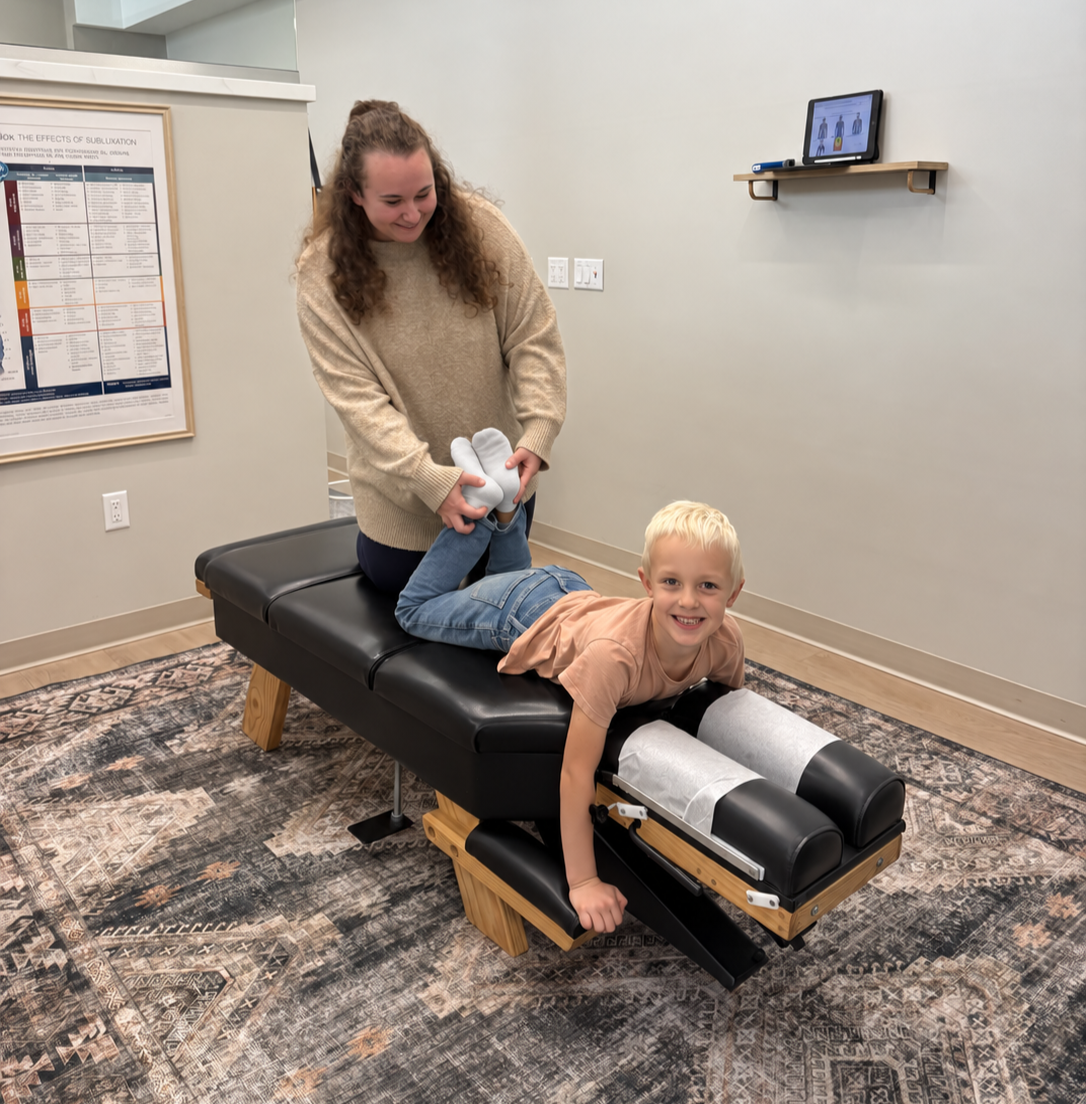
Neurologically-focused chiropractic care looks at how the nervous system is functioning, where stress may be stored, and whether the body is stuck in survival mode.
Through gentle, specific adjustments, our doctors work to support better nervous system function and help the body shift toward a more regulated state.
As the nervous system begins to regulate, some families may notice changes such as:
-
Better sleep
-
Improved digestion
-
More stable energy
-
Less tension
-
Improved stress recovery
-
Better sensory tolerance
-
More emotional flexibility
-
Greater adaptability
-
Improved focus
-
More calm in the body
-
Better capacity for daily routines
Every child is different, and results vary.
But when the nervous system has more capacity, the child often has more capacity too.
This Is a Both/And Conversation
Dysautonomia is complex.
It deserves thoughtful medical evaluation and support.
Some children may need testing, medication, cardiology care, neurology care, GI support, therapy, compression garments, hydration strategies, or school accommodations.
And they may also need support for the nervous system underneath the dysregulation pattern.
This does not have to be either/or.
It can be both/and.
Medical care can matter.
Lifestyle tools can matter.
Therapy can matter.
School accommodations can matter.
And nervous system regulation can matter too.
Your Child Is Not Making It Up
If your child is struggling with symptoms of dysautonomia, please hear this:
They are not lazy.
They are not dramatic.
They are not just anxious.
They are not making it up.
And you are not overreacting.
A dysregulated nervous system can make ordinary life feel incredibly hard.
Standing up.
Digesting food.
Sleeping deeply.
Regulating emotions.
Staying focused.
Handling heat.
Recovering after stress.
These are automatic functions most people never think about.
But for a child with dysautonomia, those automatic functions may feel like a daily battle.
Compassion matters.
Understanding matters.
And finding the right support matters.
A Calmer Way Forward
If your child is struggling with dizziness, fainting, fatigue, digestive issues, anxiety, sensory overwhelm, brain fog, or symptoms that seem to affect multiple systems at once, there may be more to the story.
There may be a nervous system pattern underneath the symptoms.
At Foundations Chiropractic, we help families look deeper.
Not with fear.
Not with blame.
Not with promises of a quick fix.
But with clarity, compassion, and a focus on the system that helps the body regulate, recover, and adapt.
Because your child is not broken.
Their body may be overwhelmed.
Their nervous system may need support.
And when we support the foundation, the body has a better chance to move through life with more steadiness, resilience, and hope.