Painful nursing. Long, exhausting feeds. A baby who always seems uncomfortable.
If tongue or lip ties have been mentioned, you may have been told to either wait it out—or go straight for a revision. But if your gut is telling you something more is going on… you’re right.
Tongue and lip ties absolutely affect feeding—but they’re often not the full story. When your baby also struggles with reflux, colic, constipation, or sleep, that’s a sign of deeper stress within the nervous system. The tie itself may only be one layer of a much bigger picture.
At Foundations Chiropractic, we’ve walked alongside countless families navigating ties and all the challenges that come with them. And what we’ve found time and time again is this: when you look deeper—past the tissue restriction and into the nervous system—you find the root cause and the path to true relief.
Let’s explore what tongue and lip ties really are, how they’re traditionally treated, and why neurologically-focused chiropractic care may be the missing link for your baby’s comfort, development, and long-term well-being.
What Are Tongue and Lip Ties?
A tongue tie (ankyloglossia) is when the tissue under the tongue—the lingual frenulum—is too tight or short, limiting tongue mobility. This might look like a heart-shaped tongue when baby cries or difficulty lifting the tongue to the roof of the mouth. An anterior tie is easier to spot, while a posterior tie is deeper and harder to detect.
A lip tie occurs when the upper lip is tethered too tightly to the gum line, making it hard for baby to flare the upper lip outward—an essential motion for creating a proper latch.
These structural restrictions impact feeding, speech, and oral development. But here’s what’s often missed:
Tight tissue is rarely the root cause—it’s usually the body’s response to deeper nervous system stress.
Signs Your Baby May Have Ties
-
Difficulty latching or staying latched
-
Clicking sounds during nursing (caused by air intake)
-
Long feeding sessions that still leave baby hungry
-
Poor weight gain
-
Painful nursing for mom—cracked nipples, mastitis, plugged ducts
-
Bottle feeding challenges (leaking milk, long feeds, poor seal)
But here’s where the pattern deepens…
Babies with tongue or lip ties often also struggle with:
-
Reflux
-
Colic
-
Constipation
-
Shallow sleep, frequent waking
-
Discomfort lying flat
-
Sensory overwhelm or fussiness
These aren’t separate issues. They’re linked signs of a stressed and dysregulated nervous system.
Why Do Ties Keep Coming Back After Revision?
It’s one of the most heartbreaking things we hear:
“We did the revision. The stretches. Everything. And the symptoms came back.”
That’s because the body often creates tongue or lip restrictions as a protective response. If neurological tension—especially in the upper neck and cranial bones—goes unaddressed, the body may recreate the restriction even after a “successful” revision.
Just like ear tubes won’t prevent infections if the root cause remains, tongue tie revisions can fail to create lasting results if the nervous system is still stuck in fight-or-flight mode.
The Real Root: Nervous System Dysfunction
When your baby’s nervous system is under stress, it can create:
-
High muscle tone and tension in the jaw, tongue, and neck
-
Poor vagus nerve function (which affects swallowing, digestion, sleep, immune function, and emotional regulation)
-
Delays in neurological development and self-regulation
This underlying stress is often rooted in what’s called subluxation—misalignments and tension in the spine and cranium that interfere with nervous system function. These can stem from:
-
Prenatal stress and maternal cortisol exposure
-
Birth trauma (forceps, vacuum, cesarean, fast or prolonged labor)
-
Early life stressors, gut dysfunction, or toxin exposure
In babies with ties, the vagus nerve—which exits at the base of the skull—is often disrupted, affecting feeding, digestion, sleep, and overall regulation.
Why Addressing the Nervous System First Matters
When we care for a baby with ties, we don’t start at the mouth—we start at the nervous system.
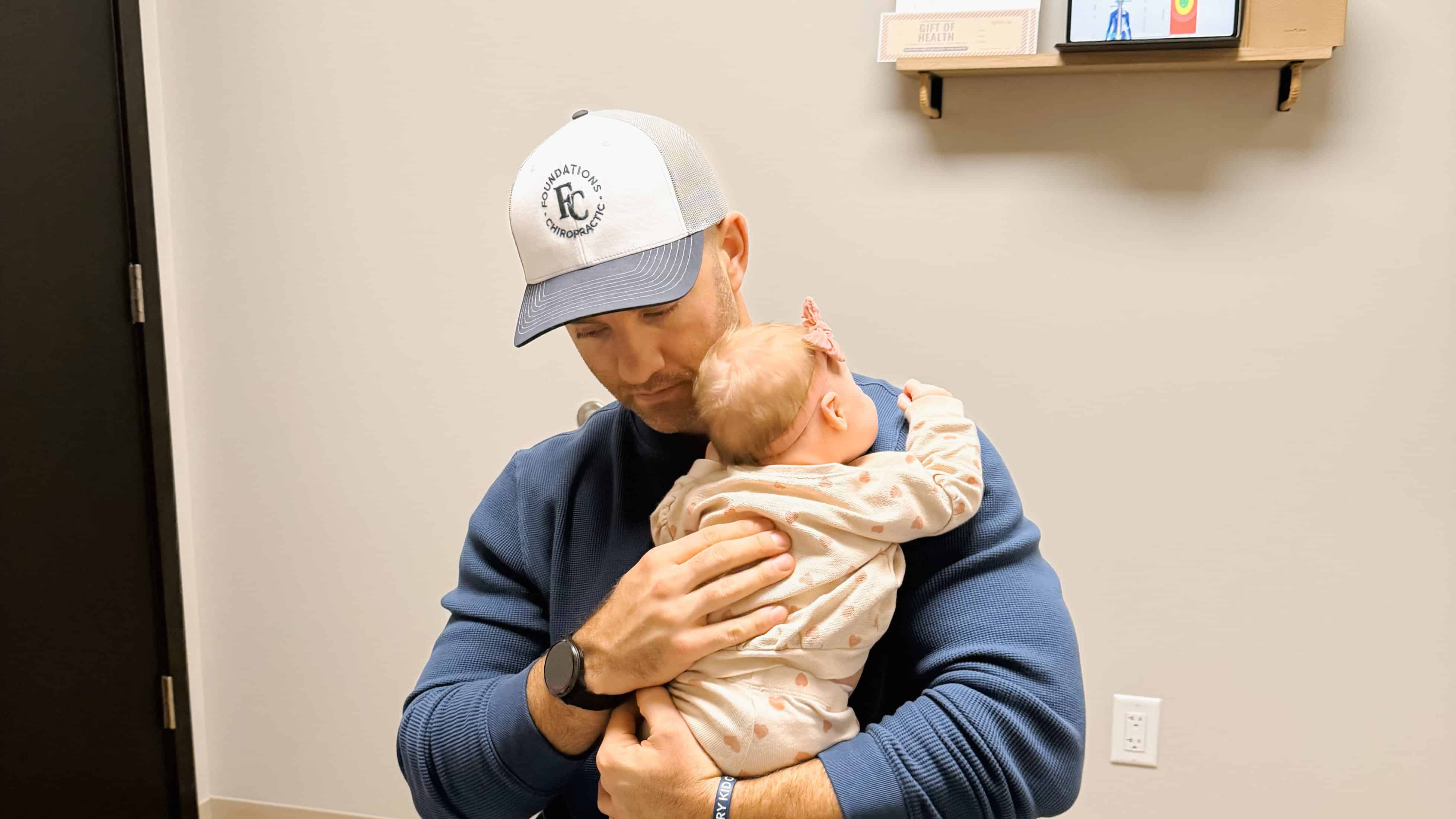
Using neurologically-focused chiropractic care, we gently adjust areas of restriction, especially in the upper cervical spine and cranial system. This helps:
-
Decrease stress and tension
-
Improve vagus nerve function
-
Enhance tongue, jaw, and lip mobility
-
Restore balance to feeding, digestion, and sleep
At Foundations Chiropractic, we use INSiGHT Scans—safe, non-invasive technology that measures nervous system function and reveals areas of subluxation and dysautonomia. This allows us to see exactly how your baby’s body is responding to stress, even before symptoms arise.
What We See in Our Office
When we start with nervous system care:
-
Many babies experience dramatic feeding improvement—sometimes avoiding revision altogether
-
Sleep becomes more restful
-
Colic and reflux reduce
-
Constipation resolves
-
Babies seem happier, calmer, more connected
And when a revision is needed, these babies heal faster, with fewer complications and better long-term outcomes. That’s because their bodies are no longer “fighting” the release—they’re ready to heal.
We’re Not Anti-Revision. We’re Pro-Foundation.
Yes, some ties absolutely need to be revised. But we’ve found that when you support the nervous system first, the revision is more effective—and sometimes, no longer needed at all.
What You Can Do at Home
-
Skin-to-skin contact helps regulate your baby’s nervous system through co-regulation
-
Laid-back nursing positions reduce tension on baby’s jaw and neck
-
Avoid prolonged crying-based sleep training in the first year—this activates the stress response instead of calming it
-
Trust your gut—if something doesn’t feel right, it’s worth exploring
Final Thoughts: Your Baby Deserves the Whole Picture
Tongue and lip ties are real—and they matter. But they’re often a sign of something deeper.
If your baby’s feeding struggles are accompanied by reflux, sleep challenges, colic, or constipation, you’re not dealing with four separate problems. You’re seeing one stressed nervous system crying out for support in multiple ways.
When care goes deeper than the tissue and looks at the full neurological picture, that’s when healing begins.
Let’s give your baby the chance to relax, feed comfortably, sleep deeply, and thrive. Not just now—but for life.
Curious if your baby’s ties might be linked to nervous system stress?
We’re here to help you get real answers. Schedule a consultation at Foundations Chiropractic to learn more about how we can support your little one.
📞 608-687-1255
📍Fountain City, WI
📧 frontdesk@foundationschiropracticwi.com