You’ve tried the things.
The breathing exercises.
The meditation apps.
The bedtime routines.
The supplements.
The gut protocols.
The diet changes.
The yoga.
The therapy.
The “just reduce stress” advice.
Maybe you’ve tried it for yourself.
Maybe you’ve tried it for your child.
And maybe some of it helped for a little while.
But then the anxiety came back.
The meltdowns continued.
The sleep struggles persisted.
The digestive issues flared again.
The sensory overwhelm stayed.
The exhaustion returned.
The body still felt stuck in stress mode.
If that is your story, please hear this:
You are not failing.
And the tools you tried are not necessarily wrong.
They may simply be out of sequence.
At Foundations Chiropractic, we often see families who have done so much to support healing — but still feel like nothing truly sticks. And for many of them, the missing piece is not more effort.
It is the nervous system.
Because sometimes, before the body can regulate well, the nervous system may need support at the foundation first.
Regulation Tools Are Good Tools
Let’s start here: regulation tools can be incredibly helpful.
Breathwork, movement, mindfulness, nutrition, sleep routines, therapy, sensory strategies, supplements, outdoor time, connection, and calming practices can all support the nervous system.
These tools can help the body downshift from stress.
They can help create rhythm.
They can help build awareness.
They can help support resilience over time.
We are not against them.
In fact, we often love them.
But for some children and adults, these tools only create temporary relief.
They calm for a moment, but the body resets right back to stress.
That is when we have to ask a deeper question:
Is the nervous system able to receive and use these tools?
Repair Before Regulate
A simple way to understand this is through the phrase:
Repair before regulate.
Regulation is helping the body shift into a calmer, more balanced state.
Repair is addressing the deeper nervous system stress that may be keeping the body stuck in survival mode.
Think of it like a car.
Regulation tools are like learning how to drive smoothly.
But if the engine is struggling, the alignment is off, and the warning lights keep flashing, driving techniques can only do so much.
You may need to look under the hood.
Or think of it like a house.
Regulation tools are like using the dimmer switch to create softer lighting.
But if the wiring is faulty, the lights may still flicker no matter how carefully you adjust the switch.
The issue is not the switch.
It is the wiring.
For many families, this is exactly what is happening in the nervous system.
They are trying to calm a system that is still carrying deep stress, interference, and dysregulation.
What Does Nervous System Dysregulation Look Like?
Nervous system dysregulation can show up in many different ways.
In children, it may look like:
-
Meltdowns
-
Sensory overload
-
Trouble sleeping
-
Difficulty focusing
-
Anxiety
-
Stimming
-
Emotional outbursts
-
Constipation
-
Reflux
-
Chronic illness
-
Immune challenges
-
Difficulty with transitions
-
Developmental delays
-
Motor challenges
-
A body that seems “stuck on high alert”
In adults, it may look like:
-
Anxiety
-
Fatigue
-
Brain fog
-
Poor sleep
-
Gut issues
-
Tension
-
Burnout
-
Chronic stress
-
Feeling wired but tired
-
Trouble relaxing
-
Low resilience
-
Feeling like every little thing sends the body into overload
This is not about weakness.
It is not about a lack of discipline.
It is not about needing to “try harder.”
It may be a sign that the nervous system is stuck in a protective pattern.
The Gas Pedal and the Brake Pedal
Your Autonomic Nervous System has two main branches.
The sympathetic nervous system is the gas pedal.
It helps the body respond to stress, urgency, danger, and demand.
The parasympathetic nervous system is the brake pedal.
It helps the body rest, digest, sleep, heal, regulate, and recover.
Both are important.
A healthy nervous system can press the gas when needed and then apply the brake when it is time to settle.
But many children and adults today are living with the gas pedal pressed down.
Their bodies are stuck in fight-or-flight.
And when the brake pedal is underactive, the body has a harder time calming down, digesting, sleeping, healing, focusing, and adapting.
This is why your child may seem exhausted but unable to sleep.
Or anxious even when nothing obvious is wrong.
Or calm after a regulation tool, but dysregulated again ten minutes later.
The system is trying.
But it may not have enough capacity yet.
The Role of the Vagus Nerve
The vagus nerve is one of the major parts of the parasympathetic nervous system.
It helps regulate:
-
Digestion
-
Heart rate
-
Breathing
-
Inflammation
-
Immune response
-
Emotional regulation
-
Social connection
-
Recovery after stress
The vagus nerve is a big part of the body’s “brake pedal.”
Many regulation tools are designed to support the vagus nerve — things like breathing, humming, cold exposure, meditation, or slow movement.
But if the nervous system is deeply stressed or stuck in a protective pattern, those tools may not be enough by themselves.
It is not that vagus nerve exercises are bad.
It is that the body may need support at the foundation so those tools can actually work better.
The Body Can Hold Stress
Stress is not always just a thought or feeling.
The body can hold stress physically.
This may come from emotional stress, physical stress, illness, injury, birth stress, chronic overwhelm, or years of living in survival mode.
When stress builds, the body may create protective patterns.
Tension.
Guarding.
Altered movement.
Poor sleep.
Digestive changes.
Sensory overload.
Heightened reactivity.
Nervous system interference.
At first, these patterns may be protective.
They help the body get through a hard moment.
But when the body stays in that protective state long after the stressor has passed, it can begin to affect everyday function.
This is why some families feel like they are constantly chasing symptoms.
The body is not randomly malfunctioning.
It may be stuck protecting itself.
The Perfect Storm
At Foundations Chiropractic, we often talk about The Perfect Storm — the layering of stressors that can overwhelm the nervous system over time.
For some children, that storm may begin before birth.
Prenatal stress.
A difficult pregnancy.
Birth intervention.
C-section.
Vacuum extraction.
Forceps.
Induction.
Early feeding struggles.
Colic.
Reflux.
Constipation.
Poor sleep.
Chronic ear infections.
Antibiotics.
Falls or injuries.
Sensory overload.
Emotional stress.
Developmental delays.
None of these things alone means a child will struggle.
But when stressors stack, the nervous system may become more reactive and less adaptable.
The body starts living closer and closer to the edge.
Then, even small stressors can create big reactions.
A change in routine.
A poor night of sleep.
A loud environment.
A new food.
A busy school day.
A growth spurt.
An illness.
To everyone else, the reaction may seem “too big.”
But to that child’s nervous system, it may feel like too much.
Why the Tools May Not Be Sticking
Many parents know this cycle well.
You try a new supplement and it helps for a few weeks.
You change the diet and see some progress, but then plateau.
You start therapy and gain tools, but meltdowns still happen.
You build the perfect bedtime routine, but sleep still feels impossible.
You do calming activities, but your child’s body still seems stuck in stress.
This can feel so discouraging.
But it does not mean those tools are useless.
It may mean the foundation needs support first.
When the nervous system is stuck in survival mode, the body may have a harder time using the good things you are giving it.
Digestion may not absorb nutrients as well.
Sleep may not become deeply restorative.
Breathing tools may calm temporarily but not create lasting change.
Therapies may help, but progress may feel slower than expected.
The body may keep snapping back to the same stressed baseline.
The issue is not that you are doing it wrong.
The issue may be that the nervous system needs more capacity.
Signs Your Child May Need Deeper Nervous System Support
Your child may benefit from a deeper nervous system assessment if you notice:
-
Progress does not seem to stick
-
Multiple therapies help temporarily, then plateau
-
Gut protocols or supplements only work for a short time
-
Meltdowns happen over small triggers
-
Sleep routines do not create restful sleep
-
Your child resets quickly back into stress mode
-
They are always “on”
-
They struggle with transitions
-
Their body seems tense or guarded
-
They have multiple systems involved — sleep, digestion, immune, behavior, sensory, focus, or development
-
They are easily overwhelmed by normal daily life
-
You feel like you have tried everything, but something is still missing
These signs do not mean your child is broken.
They may mean the nervous system is asking for a different kind of support.
What Nervous System Support Actually Does
At Foundations Chiropractic, our goal is not to treat or cure anxiety, ADHD, autism, sensory processing challenges, digestive issues, sleep problems, immune challenges, developmental delays, or any medical diagnosis.
We do not replace your pediatrician, therapist, OT, PT, speech therapist, counselor, functional medicine provider, or medical team.
Our focus is supporting nervous system regulation, brain-body communication, adaptability, and resilience.
Neurologically-focused chiropractic care looks at how the nervous system is functioning, where stress may be stored, and whether the body is stuck in survival mode.
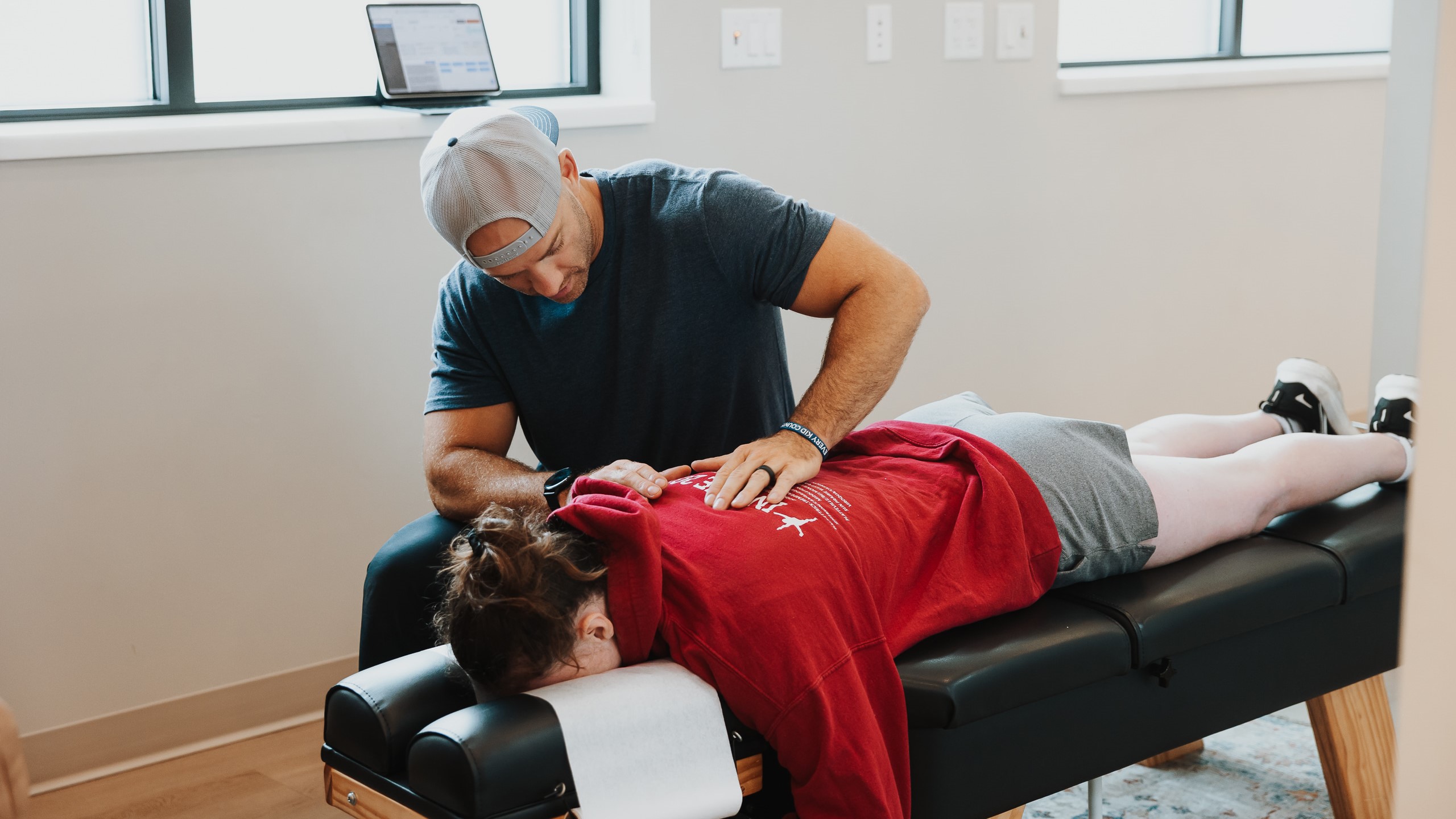
Through gentle, specific adjustments, our doctors work to support better nervous system function and help the body shift toward a more regulated state.
The goal is to help the body move from protection toward connection, growth, digestion, sleep, healing, and adaptability.
How INSiGHT Scans Help Us Look Deeper
At Foundations Chiropractic, we do not want to guess when it comes to nervous system function.
That is why we use INSiGHT Scans.
These scans are safe, gentle, and non-invasive.
They do not diagnose medical conditions.
They are not a treatment or cure.
Instead, they help us measure patterns of nervous system stress and dysregulation.
INSiGHT Scans help us better understand:
-
Autonomic balance
-
Stress response
-
Heart Rate Variability
-
Neuromuscular tension
-
Adaptability
-
Patterns of dysregulation
-
How the body changes over time
For many families, these scans provide clarity.
They help parents see what they have been feeling for years:
“My child’s body is working too hard.”
They also help us create a personalized care plan based on what the nervous system is showing us — not guesswork.
Repair and Regulation Work Together
The goal is not to choose between nervous system support and regulation tools.
It is not chiropractic care or therapy.
It is not adjustments or breathwork.
It is not nervous system scans or nutrition.
It is not care plans or calming strategies.
It is both/and.
When the nervous system has more capacity, regulation tools may begin working better.
Breathing may become more effective.
Therapy tools may stick more easily.
Sleep routines may land better.
Nutrition may support more deeply.
Movement may feel more organized.
Sensory strategies may be easier to use.
The body may recover faster after stress.
This is why sequence matters.
Support the foundation.
Then build the tools.
Healing Takes Time
Nervous system healing is not always quick.
When a child or adult has spent months or years stuck in survival mode, the body often needs time and repetition to learn a new pattern.
There may be ups and downs.
Progress may not be perfectly linear.
Some weeks may feel like a big step forward.
Other weeks may feel slower.
That does not mean nothing is happening.
A nervous system that has been protecting for a long time may need consistency, safety, and repetition before it fully trusts a new baseline.
The goal is not a quick fix.
The goal is lasting change.
You Do Not Need More Guilt
If you have tried everything, please do not turn this into another reason to blame yourself.
You did what you knew to do.
You followed the advice you had.
You sought help.
You researched.
You advocated.
You tried to support your child.
That matters.
This conversation is not about shame.
It is about clarity.
Because sometimes the most freeing thing a parent can hear is:
You are not crazy.
You are not failing.
Your child is not broken.
And there may be a reason the things you have tried have not fully worked yet.
A Foundation-First Way Forward
If your child’s body still feels stuck in stress mode, there may be more to the story.
If the meltdowns, anxiety, sleep struggles, digestive issues, sensory overload, or chronic health challenges keep returning, the nervous system may need deeper support.
At Foundations Chiropractic, we help families look at the foundation.
Not with fear.
Not with blame.
Not with pressure.
But with clarity, compassion, and a focus on the system that helps the body regulate, recover, and adapt.
Because regulation tools are valuable.
But they work best when the nervous system has the capacity to use them.
And when we support the foundation first, the body has a better chance to move out of survival mode and into a place of greater calm, resilience, and connection.