Getting out the door for school.
Turning off the TV.
Leaving the park.
Starting homework.
Moving from playtime to bedtime.
For some kids, these everyday moments feel simple. For others, they can feel impossible.
One minute, your child seems fine. The next, they’re melting down over putting on shoes, brushing teeth, leaving the house, or turning off a screen.
And as a parent, it can feel confusing and exhausting.
You may find yourself wondering:
“Why is this such a big deal?”
“Why can’t they just move on?”
“Why does every transition turn into a battle?”
“Are they being defiant, or is something else going on?”
At Foundations Chiropractic, we want parents to know this:
Transition struggles are not always a behavior problem.
Many times, they are a nervous system problem.
When a child’s nervous system is overwhelmed, overstimulated, or stuck in stress mode, even a small change can feel like too much. What looks like resistance on the outside may actually be dysregulation on the inside.
And when we understand what’s happening beneath the behavior, we can begin supporting the child in a much deeper way.
What Is a Transition?
A transition is any moment when your child has to stop one activity and move into another.
It could be:
-
Leaving the house for school
-
Getting out of the car
-
Turning off a screen
-
Moving from play to dinner
-
Going from recess back to class
-
Starting homework
-
Getting ready for bed
-
Switching from weekend mode to school-week mode
To an adult, these may seem like ordinary parts of the day.
But to a child’s brain, transitions require a lot of work.
They have to stop what they are doing, shift their attention, understand what is coming next, manage their emotions, and move their body into a new task.
That takes flexibility.
It takes focus.
It takes emotional regulation.
And for kids whose nervous systems are already under stress, that shift can feel overwhelming.
Why Transitions Feel So Hard
Transitions are hard because they ask the brain to switch gears.
This involves executive function skills like working memory, impulse control, attention, and cognitive flexibility.
These skills are still developing throughout childhood. And for children with ADHD, anxiety, sensory processing challenges, sleep struggles, or emotional dysregulation, transitions can require even more energy.
That’s why a simple request like “time to put your shoes on” may lead to tears, stalling, yelling, shutting down, or a full meltdown.
It’s not always because your child is trying to make the morning harder.
Their nervous system may be experiencing that change as stress.
When a child is already close to their limit, one more demand can push them over the edge.
What Transition Struggles Can Look Like
Transition struggles do not always look the same from child to child.
Some kids explode.
Some shut down.
Some stall, negotiate, or ignore.
Some become clingy, anxious, or tearful before the transition even happens.
You may notice things like:
-
Meltdowns when asked to stop an activity
-
Stalling or pretending not to hear you
-
Big reactions to small changes in routine
-
Anxiety before school or bedtime
-
Physical complaints like stomachaches or headaches
-
Difficulty refocusing after switching tasks
-
Needing things to happen in a very specific order
-
Trouble leaving preferred activities
-
Morning routines that feel like a battle
-
Bedtimes that drag on for hours
If this happens occasionally, it may simply be a normal part of childhood.
But when transitions are intense, frequent, and affecting your family’s daily life, it may be a sign that your child’s nervous system needs more support.
It’s Not Just Behavior
So much parenting advice focuses on behavior.
Use a reward chart.
Give a consequence.
Set a timer.
Be more consistent.
Give fewer warnings.
Give more warnings.
Try a sticker system.
And while some of those tools can be helpful, they often miss the root.
Because you cannot reward-chart a child into a regulated nervous system.
If your child’s body is stuck in stress mode, they may not have access to the calm, flexible, thinking part of the brain in that moment.
Their body is not saying, “I want to be difficult.”
Their body is saying, “This feels too hard for me right now.”
That doesn’t mean we remove all boundaries or expectations.
It means we support the nervous system first, so the child can actually access the skills we’re asking them to use.
The Gas Pedal and the Brake Pedal
One of the easiest ways to understand your child’s nervous system is to think about a gas pedal and a brake pedal.
The sympathetic nervous system is the gas pedal.
It helps the body respond to stress, stay alert, move quickly, and protect itself.
The parasympathetic nervous system is the brake pedal.
It helps the body rest, digest, sleep, heal, regulate, and calm down.
A healthy nervous system can move between the two.
It can speed up when needed, then slow back down when the stress has passed.
But many kids we see are stuck with the gas pedal pressed down.
Their body is running in fight-or-flight mode, even during normal daily routines.
When that happens, transitions feel threatening.
A change in plans feels unsafe.
Stopping a preferred activity feels impossible.
A simple instruction feels overwhelming.
The body reacts before the brain can reason.
This is why transition meltdowns often feel bigger than the situation.
The situation may be small.
But the nervous system response is not.
Why Kids With ADHD, Anxiety, and Sensory Challenges Often Struggle More
Children with ADHD, anxiety, and sensory processing challenges often have a harder time with transitions because their nervous systems are already working overtime.
A child with ADHD may be deeply focused on what they are doing and struggle to pull their attention away.
A child with anxiety may begin worrying about what comes next before the transition even happens.
A child with sensory sensitivities may already be overwhelmed by lights, sounds, clothing, noise, or movement — and one more demand becomes too much.
The labels may be different, but the pattern underneath is often similar:
The nervous system is under stress.
The gas pedal is working overtime.
The brake pedal is having a hard time helping the child slow down, shift gears, and settle.
This is why transition struggles often show up alongside other challenges like poor sleep, constipation, stomachaches, chronic illness, focus struggles, emotional outbursts, and sensory overload.
They may not be separate issues.
They may be connected through the nervous system.
The Perfect Storm Behind Transition Struggles
At Foundations Chiropractic, we often talk about The Perfect Storm — the stacking of stressors that can overwhelm a child’s developing nervous system.
For some children, that storm begins before birth with prenatal stress or a difficult pregnancy.
For others, it may include birth stress such as a long labor, C-section, vacuum extraction, forceps, or other interventions that place stress on the baby’s delicate neurospinal system.
Then early childhood stressors may continue to build:
Ear infections.
Antibiotics.
Falls.
Poor sleep.
Digestive issues.
Illness.
Screen overload.
Sensory overwhelm.
A fast-paced, overstimulating world.
Each stressor on its own may not seem like a big deal.
But stacked together, over time, they can leave a child’s nervous system stuck in survival mode.
And a child stuck in survival mode will often struggle with change.
Not because they are bad.
Not because you are doing something wrong.
But because their body does not yet feel safe enough to shift smoothly from one thing to the next.
How to Support Transitions at Home
The goal is not to eliminate transitions.
That would be impossible.
The goal is to make transitions feel safer and more predictable for your child’s nervous system.
Here are a few strategies that can help.
1. Give Previews and Countdowns
Let your child know what is coming before it happens.
Try:
“In 10 minutes, we’re going to clean up.”
“In 5 minutes, we’ll put shoes on.”
“After this episode, the TV goes off.”
“First breakfast, then teeth, then shoes.”
This gives the brain time to prepare instead of feeling blindsided.
For younger kids, visual timers or picture schedules can be especially helpful.
2. Build Predictable Routines
Predictability is calming to the nervous system.
When mornings, meals, and bedtimes follow the same general rhythm, your child’s brain does not have to work as hard to figure out what comes next.
A simple routine chart can make a big difference.
Not because it magically fixes behavior, but because it lowers the stress of the unknown.
3. Use Movement
Some kids need movement to help their nervous system transition.
Instead of saying, “Walk to the car,” try:
“Let’s hop to the car.”
“Can you bear crawl to your room?”
“Let’s do 10 jumping jacks, then shoes.”
“Race me to the bathroom to brush teeth.”
Movement can help discharge stress energy and support the brain-body connection before asking your child to shift tasks.
4. Offer a Transition Object
For some children, carrying a small object from one place to the next can help bridge the gap.
This might be a favorite toy, a small fidget, a stuffed animal, or something meaningful they can hold during the transition.
It gives the nervous system a sense of continuity and comfort.
5. Use Fewer Words During the Hard Moment
When your child is already melting down, their brain is not ready for a lecture.
This is not the time for reasoning, teaching, or explaining every detail.
Instead, keep your words simple and calm.
“I’m here.”
“You’re safe.”
“This is hard.”
“We’re going to do this together.”
“First shoes, then car.”
Save the bigger conversations for later, once their nervous system has settled.
6. Stay Regulated Yourself
This one is hard, but powerful.
Children co-regulate with the adults around them.
That means your calm can help their nervous system find calm.
Your tone, facial expression, breathing, posture, and pace all send signals of safety or stress.
This does not mean you have to be perfect.
It means that when you can pause, soften your voice, slow your breathing, and stay grounded, your child’s nervous system has something steadier to borrow from.
And if you struggle to stay calm too, that is not a failure.
It may simply mean your nervous system needs support as well.
When Home Strategies Aren’t Enough
Home strategies are important.
They can absolutely help.
But if your child is still melting down over transitions day after day despite your best efforts, that is not a sign that you need to try harder.
It may be a sign that the nervous system needs deeper support.
This is especially true if transition struggles show up alongside:
-
Sleep challenges
-
Anxiety
-
Constipation
-
Stomachaches
-
Sensory sensitivities
-
Chronic illness
-
Focus challenges
-
Emotional outbursts
-
Difficulty calming down
-
Big reactions to small changes
When multiple systems are struggling, we want to look at the system that controls and coordinates them all:
The nervous system.
How Neurologically-Focused Chiropractic Care Can Help
At Foundations Chiropractic, we focus on the nervous system.
Our goal is not to treat transition struggles as an isolated behavior problem.
Our goal is to understand what is happening beneath the surface in your child’s brain and body.
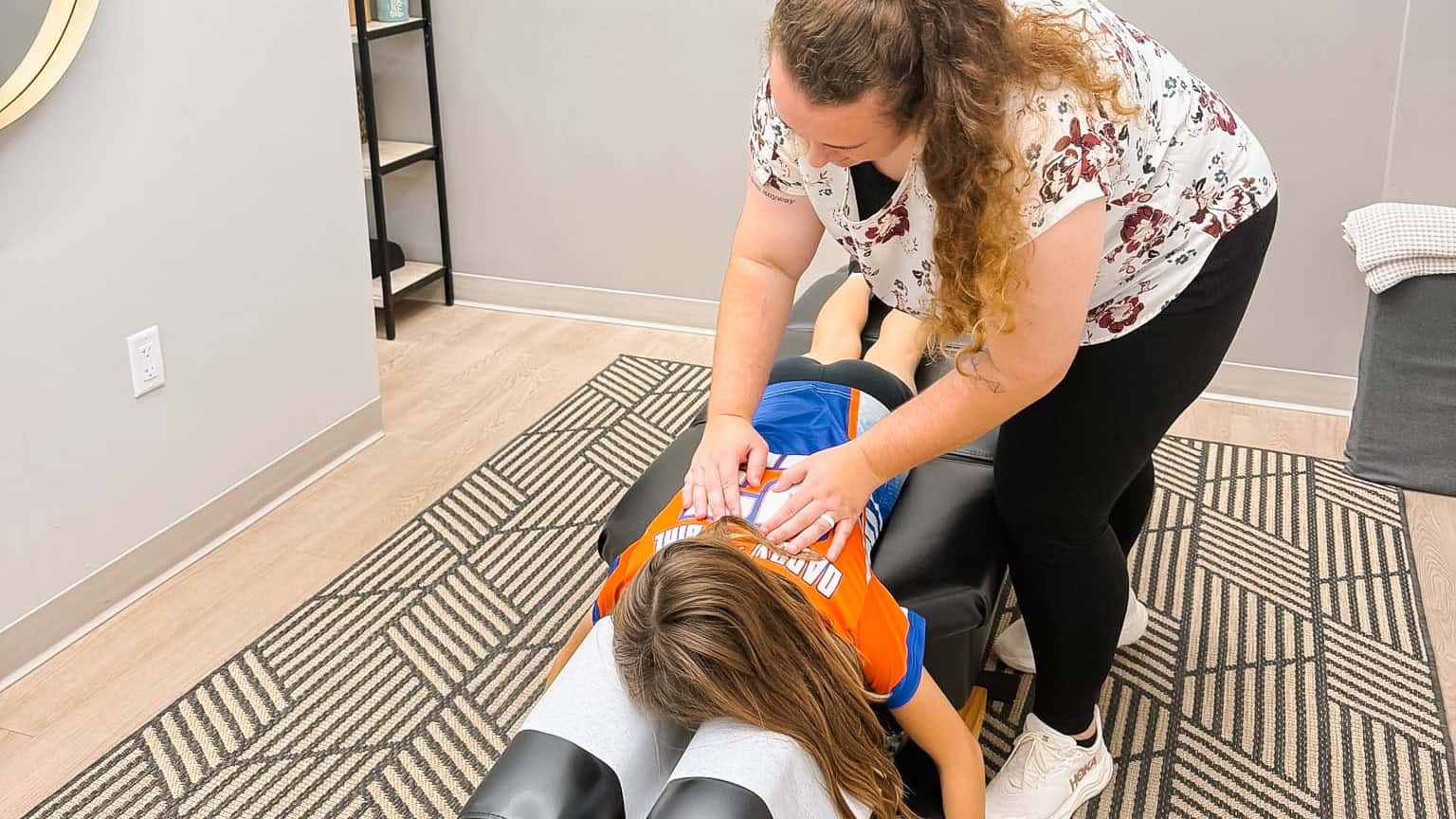
Neurologically-focused chiropractic care is designed to identify and support areas of stress, tension, and interference within the nervous system.
Through gentle, specific adjustments, our doctors work to help the body shift out of chronic stress mode and into a more regulated state.
As the nervous system becomes more adaptable, many parents begin noticing changes like:
-
Easier mornings
-
Fewer meltdowns
-
Smoother bedtimes
-
Better sleep
-
More flexibility
-
Less resistance to change
-
Improved emotional recovery after hard moments
-
A calmer overall rhythm at home
Every child is different, and results vary.
But when a child’s nervous system gains more capacity, daily transitions often become less overwhelming.
Why We Use INSiGHT Scans
At Foundations Chiropractic, we don’t want to guess.
That’s why we use INSiGHT Scans to help us better understand how your child’s nervous system is functioning.
These scans are safe, gentle, and non-invasive.
They do not diagnose medical conditions.
They are not a treatment or cure for ADHD, anxiety, sensory processing disorder, sleep struggles, digestive issues, or any other condition.
Instead, they help us measure nervous system function.
INSiGHT Scans help us look at:
-
Autonomic balance
-
Stress response
-
Neuromuscular tension
-
Adaptability
-
Patterns of nervous system dysregulation
This gives us a clearer picture of whether your child’s nervous system is stuck in stress mode, where tension may be showing up, and how their body is responding over time.
The scans help guide care.
They help us create a plan that is specific to your child, instead of guessing based only on symptoms.
A Calmer Path Through Change
Smoother transitions do not come from a better sticker chart or a louder reminder.
They come from a nervous system that feels safe enough to shift.
When your child can ease off the gas pedal and access the brake pedal, change becomes less threatening.
They can leave the house with less panic.
Turn off the screen with less resistance.
Move into bedtime with more ease.
Start homework with less overwhelm.
Try something unexpected without falling apart.
And when you begin to see transitions through a nervous system lens, everything changes.
You stop seeing a “difficult child.”
You start seeing a child whose body is asking for help.
Your Child Is Not Broken
If transitions have been hard in your home, please hear this:
You are not failing.
Your child is not broken.
And you are not alone.
There may be a deeper reason why everyday changes feel so big.
At Foundations Chiropractic, we help families look beneath the behavior and better understand the nervous system patterns driving the struggle.
Because when the nervous system begins to regulate, the whole day can feel different.
Mornings can feel calmer.
Bedtimes can feel lighter.
Transitions can become smoother.
And your child can begin moving through life with more ease, confidence, and peace.