The moment your child receives a diagnosis can be hard to describe.
For some parents, it brings relief.
Finally, there is a word for what you have been seeing. Finally, someone is acknowledging that your child is not “just being difficult.” Finally, your instincts are being validated.
But at the very same time, it can bring grief.
Grief over the unknowns.
Grief over the future you imagined.
Grief over how hard things have already been.
Grief over wondering what this label will mean for your child moving forward.
And somewhere in the middle, many parents quietly ask:
“Will this diagnosis help my child… or will it limit them?”
At Foundations Chiropractic, we want to hold both truths with you.
A diagnosis can be helpful.
And a diagnosis is not the whole story.
It can open important doors to support, services, therapy, accommodations, and understanding.
But it should never become the box your child is expected to live inside forever.
Your child is not a label.
Your child is a whole person — beautifully made, deeply loved, full of potential, and still becoming.
Why Diagnoses Can Be Helpful
Many families fight for months or even years to get answers.
They sit through appointments, evaluations, screenings, specialist visits, school meetings, and hard conversations. They watch their child struggle with sleep, focus, sensory overload, meltdowns, anxiety, learning challenges, social stress, or emotional regulation — often while being told to wait, discipline differently, or stop worrying so much.
So when a diagnosis finally comes, it can feel validating.
It can say:
You were not imagining this.
Your child’s struggles are real.
You were right to keep asking questions.
That matters.
A diagnosis can also give families access to support that may have been difficult or impossible to receive otherwise.
1. A Diagnosis Can Open Doors to Services
In many systems, a diagnosis is what allows a child to receive extra support.
It may help with:
- IEP or 504 plan eligibility
- Classroom accommodations
- Occupational therapy
- Speech therapy
- Behavioral support
- Early intervention services
- Specialized instruction
- Extra support at school
For many children, these services are incredibly valuable.
They can help make school feel more manageable, reduce overwhelm, support development, and give families more tools.
A diagnosis may help others finally understand that your child is not choosing to struggle — they need support.
2. A Diagnosis Can Help With Coverage and Resources
A diagnosis can also help families access financial support.
Therapy, evaluations, adaptive tools, and specialized services can be expensive. For some families, the diagnostic code is what helps insurance, school systems, state programs, or nonprofit resources step in.
That can be a lifeline.
Parents should not have to carry the full weight of their child’s care alone. When a diagnosis helps open doors to resources, that can be a gift.
3. A Diagnosis Can Bring Validation
Many parents feel blamed before they feel helped.
They are told their child needs more discipline.
More structure.
More consequences.
Less screen time.
A better bedtime routine.
A firmer parent.
And while routines and boundaries absolutely matter, they do not explain everything.
When a child is struggling with sensory processing, anxiety, ADHD, autism-related challenges, developmental delays, sleep issues, or emotional dysregulation, there is often something deeper happening beneath the behavior.
A diagnosis can help shift the conversation from blame to understanding.
It can help family members, teachers, and providers take your concerns more seriously.
It can help your child feel seen.
4. A Diagnosis Can Help Families Find Community
One of the hardest parts of parenting a child with extra needs is feeling alone.
A diagnosis can connect families to people who understand.
Support groups.
Online communities.
Other parents.
Specialized providers.
Local resources.
Educational tools.
Families walking a similar road.
That kind of connection matters.
Sometimes just hearing “us too” can help a parent breathe again.
But a Diagnosis Has Limits
While diagnoses can be helpful, they also have limitations.
A diagnosis describes a pattern of symptoms or behaviors.
It does not always explain why those struggles are happening.
It may tell you what your child is experiencing, but it may not tell you what their nervous system is carrying underneath it all.
And that difference matters.
At Foundations Chiropractic, we are not against diagnoses.
We simply believe children deserve to be seen beyond them.
Because when a label becomes the entire lens, it can sometimes limit how others see your child — and how your child sees themselves.
1. A Label Should Not Become an Identity That Limits Potential
Words matter.
When a child receives a diagnosis, it can become part of how the world understands them.
Sometimes that is helpful.
But sometimes, the diagnosis starts to overshadow the child.
Instead of seeing their personality, strengths, gifts, interests, humor, creativity, sensitivity, and resilience, people may start seeing only the label.
ADHD.
Autism.
Anxiety.
Sensory Processing Disorder.
Developmental delay.
But your child is not a diagnosis.
They are not a checklist of symptoms.
They are not broken.
They are not less capable of growth, connection, healing, learning, or change.
A diagnosis may help explain part of their experience, but it should never define the entirety of who they are.
Some families prefer person-first language. Some prefer identity-first language. What matters most is honoring the child and making sure the label never becomes a ceiling over their life.
2. A Label Can Sometimes Lower Expectations
One hidden danger of labels is that they can unintentionally cause adults to expect less.
“He can’t do that because of his diagnosis.”
“She will always struggle with this.”
“That’s just how kids with this label are.”
“This is just who they are.”
But children are still developing.
Their brains and nervous systems are still growing, adapting, and changing.
Support should never mean giving up on growth.
Accommodations can be incredibly helpful, especially when a child is overwhelmed. But the goal should not be to assume they will always stay exactly where they are.
The goal is to support the child where they are while still believing in what is possible.
3. A Label Can Narrow the Care Conversation
Once a child has a diagnosis, it is easy for every struggle to be filtered through that label.
The sleep struggles? “That’s just ADHD.”
The sensory overload? “That’s just autism.”
The stomachaches? “That’s just anxiety.”
The meltdowns? “That’s just behavior.”
The social struggles? “That’s just part of the diagnosis.”
But what if these symptoms are connected?
What if the child is not dealing with ten separate issues?
What if the common thread is nervous system dysregulation?
The nervous system controls and coordinates sleep, digestion, immune function, focus, emotional regulation, sensory processing, stress response, and adaptability.
So when a child struggles in many of those areas at once, we believe it is worth asking a deeper question:
How is their nervous system functioning?
4. A Label Does Not Always Reveal the Root
Many diagnoses are based on observable signs and behaviors.
That does not make them meaningless.
But it does mean they may not fully explain what is happening underneath.
At Foundations Chiropractic, we often see children whose challenges have been building for years.
Maybe it started with prenatal stress.
A difficult pregnancy.
Birth interventions.
A long labor.
A C-section.
Vacuum extraction.
Forceps.
Colic.
Reflux.
Poor sleep.
Chronic ear infections.
Antibiotics.
Constipation.
Sensory overload.
Falls.
A fast-paced, overstimulating world.
We often call this The Perfect Storm — the layering of stressors that can overwhelm a developing nervous system over time.
None of those things alone determines a child’s future.
But stacked together, they can leave the nervous system stuck in survival mode.
And a child stuck in survival mode may struggle to sleep, digest, focus, regulate emotions, handle transitions, process sensory input, or feel calm in their body.
That is why we want to look deeper than the label.
The Nervous System Lens
At Foundations Chiropractic, we see children through a nervous system lens.
That means instead of asking only, “What diagnosis does this child have?”
We also ask:
What has this child’s nervous system been through?
Is their body stuck in fight-or-flight?
Are they able to access rest, digestion, sleep, healing, and regulation?
Where is stress being stored?
How well are the brain and body communicating?
Does this child have the capacity to adapt to daily life?
This lens does not erase the diagnosis.
It adds depth to it.
It helps us understand why a child may be melting down, shutting down, avoiding, seeking constant input, struggling with sleep, reacting strongly to change, or feeling overwhelmed by everyday life.
The diagnosis may name the pattern.
The nervous system may help explain the root.
Your Child’s Behavior Is Communication
Many children with diagnoses are treated like their behavior is the problem.
But behavior is often communication.
A meltdown may be communicating overwhelm.
Avoidance may be communicating fear.
Hyperactivity may be communicating a body stuck in go-mode.
Picky eating may be communicating sensory stress.
Constipation may be communicating autonomic nervous system imbalance.
Sleep struggles may be communicating that the body cannot downshift.
When we only try to manage the behavior, we may miss the message.
But when we look at the nervous system, we can begin asking:
What is this child’s body trying to tell us?
That question creates compassion.
It also creates a better plan.
How INSiGHT Scans Help Us Look Deeper
At Foundations Chiropractic, we do not want to guess when it comes to your child’s nervous system.
That is why we use INSiGHT Scans.
These scans are safe, gentle, and non-invasive.
They do not diagnose autism, ADHD, anxiety, sensory processing disorder, developmental delays, or any other medical condition.
They are not a treatment or cure for any condition.
Instead, they help us measure patterns of stress and dysregulation within the nervous system.
INSiGHT Scans help us better understand:
- Autonomic balance
- Stress response
- Neuromuscular tension
- Adaptability
- Patterns of nervous system stress
- How the body responds to care over time
For many families, these scans bring clarity.
They help parents see that their child is not broken.
Their child’s body has been working hard.
And when we can better understand what the nervous system is carrying, we can create care that is more specific, intentional, and supportive.
How Neurologically-Focused Chiropractic Care Fits In
At Foundations Chiropractic, our goal is not to “treat” a diagnosis.
We are not here to cure autism, ADHD, anxiety, sensory processing disorder, or any other condition.
Our goal is to support the nervous system underneath the struggles.
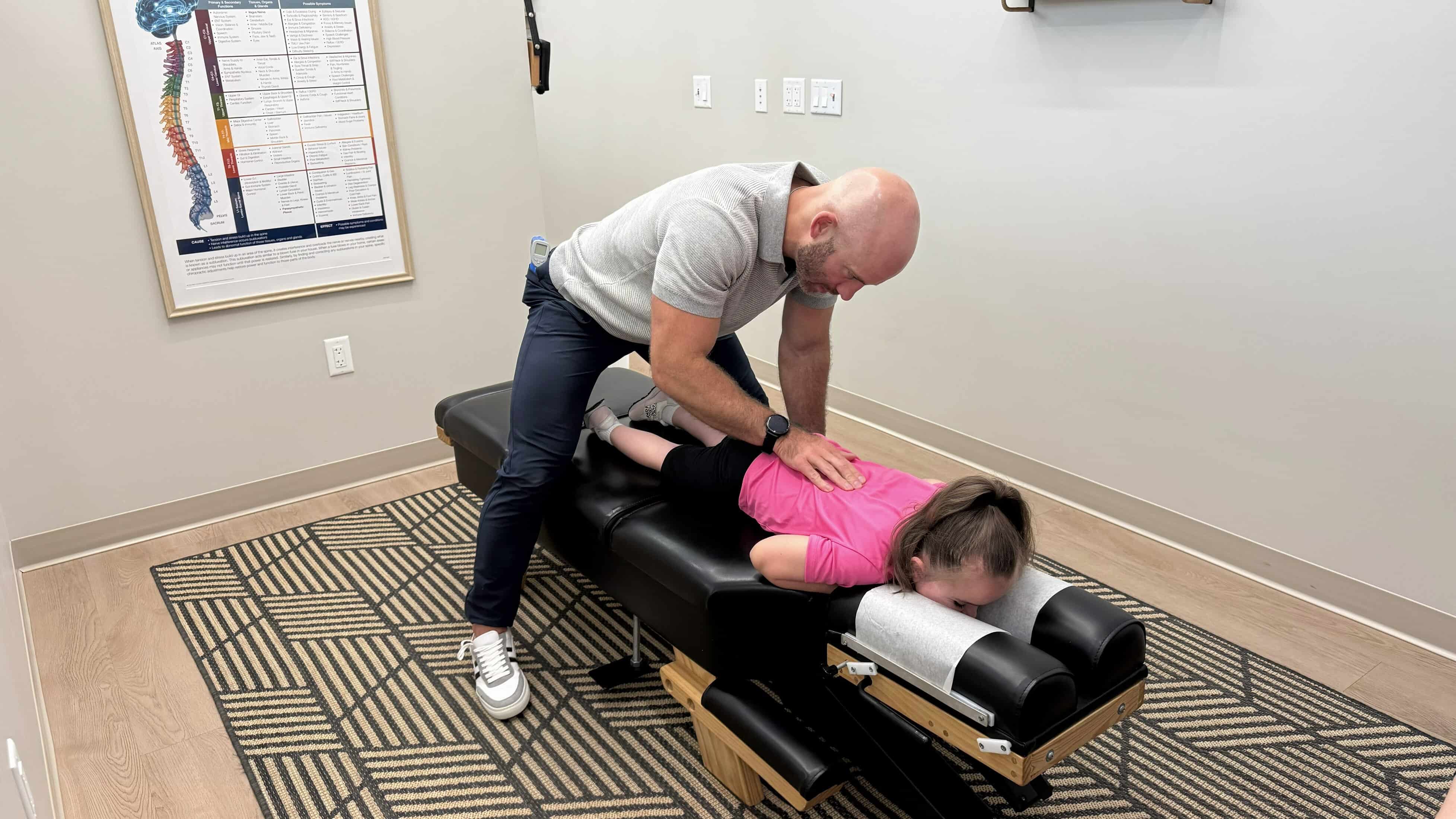
Neurologically-focused chiropractic care looks at how the brain and body are communicating, where stress may be stored, and whether the nervous system is stuck in survival mode.
Through gentle, specific adjustments, our doctors work to support better nervous system regulation, adaptability, and resilience.
As the nervous system becomes more regulated, many families begin noticing changes like:
- Better sleep
- Improved digestion
- Fewer meltdowns
- Smoother transitions
- More emotional flexibility
- Better focus
- Less sensory overwhelm
- Improved recovery after stress
- More ease in daily routines
- Greater connection and confidence
Every child is different, and results vary.
But when the nervous system has more capacity, the child often has more capacity too.
This Is a Both/And Conversation
You do not have to choose between using a diagnosis and believing in your child’s potential.
It can be both.
You can use the diagnosis to access services and still refuse to let it define your child.
You can accept accommodations and still believe in growth.
You can pursue therapy and still look deeper at the nervous system.
You can honor the reality of your child’s current struggles and still hold hope for what is possible.
You can sit in the grief and still believe your child’s story is not finished.
This is not about denying the diagnosis.
It is about making sure the diagnosis does not become the end of the conversation.
Reframing the Language at Home
One of the most powerful things parents can do is reframe the way they talk about their child’s challenges.
Instead of “My child is bad at transitions,” try “Transitions are hard for their nervous system right now.”
Instead of “They are so dramatic,” try “Their body feels overwhelmed.”
Instead of “They can’t handle anything,” try “Their nervous system needs more support and capacity.”
Instead of “This is just who they are,” try “This is where they are right now, and we are helping their body grow.”
Language shapes expectation.
And expectation shapes how we support the child.
Your Child’s Story Is Still Being Written
A diagnosis may explain some things.
It may open doors.
It may help you access services, community, and support.
But it does not define your child’s future.
Your child is still growing.
Their nervous system is still changing.
Their capacity can build.
Their resilience can strengthen.
Their body can learn safety.
Their story is not finished.
At Foundations Chiropractic, we believe children deserve to be seen fully — not just through their symptoms, struggles, or labels, but through the lens of who they are and who they are becoming.
Your child is not broken.
They are not a diagnosis.
They are not a problem to be fixed.
They are a whole child with a nervous system that may need support.
And when we begin there, everything changes.
A Hopeful Way Forward
If your child has recently received a diagnosis, or if you are still searching for answers, take a deep breath.
You do not have to figure everything out today.
You can use the tools and services available to you.
You can build a care team you trust.
You can advocate for your child.
You can ask deeper questions.
And you can keep believing that more is possible.
At Foundations Chiropractic, we are here to help families look beneath the label and better understand the nervous system patterns that may be driving the struggle.
Because your child’s diagnosis may be part of their story.
But it is not the whole story.
And it is certainly not the final chapter.