You know every diagnosis.
Every therapy schedule.
Every food sensitivity.
Every supplement.
Every school meeting.
Every behavior pattern.
Every late-night Google search that led to five more tabs and even more questions.
You can probably quote parts of your child’s IEP from memory. You know which foods trigger a flare-up, which transitions are hardest, which appointments are coming up next, and which strategies have worked… or haven’t.
But here’s the question almost no one asks you:
How are you doing?
Not how is your child doing.
Not how are therapies going.
Not what’s the latest update from school.
How are you?
If that question makes your shoulders drop, brings tears to your eyes, or makes you realize how long it has been since someone truly checked on you, this is for you.
Because so many parents are quietly carrying more than anyone realizes.
And while your child’s healing matters deeply, your nervous system matters too.
Parents Have a Perfect Storm Too
At Foundations Chiropractic, we talk a lot about the “Perfect Storm” — the stacking of stressors that can overwhelm a child’s developing nervous system.
But parents can have their own Perfect Storm too.
For some, it started long before parenthood. A stressful childhood. A season of trauma. Years of pushing through. Fertility struggles. A difficult pregnancy. A birth experience that didn’t go the way you hoped.
Then your child arrived, and the layers kept building.
Sleepless nights.
Feeding struggles.
Developmental concerns.
Therapy appointments.
Diagnosis conversations.
School meetings.
Insurance battles.
Financial stress.
Family members who don’t understand.
Doctors who dismissed your concerns.
The loneliness of feeling like no one truly sees what your family is carrying.
Each of those moments wasn’t just emotionally hard.
It was also a neurological stressor.
Your nervous system had to fire up, stay alert, advocate, protect, prepare, research, respond, and keep going.
And because you love your child so much, you did.
Again and again.
But over time, the nervous system can only carry so much before it starts to show signs of overwhelm.
When Burnout Is Really Nervous System Dysregulation
Most conversations about parent burnout focus on exhaustion, irritability, and needing more rest.
And while those things may be true, they often don’t tell the full story.
Many parents aren’t just tired.
They’re wound up and worn out.
That means the nervous system is stuck in two places at once. The gas pedal is pressed down, keeping the body in fight-or-flight mode, while the brake pedal — the part responsible for rest, digestion, healing, and regulation — is barely able to do its job.
That’s why you can feel exhausted but unable to sleep.
It’s why you can be overstimulated, but numb.
Anxious, but foggy.
Depleted, but still unable to slow down.
Desperate for rest, but unable to actually feel restored.
This can show up as:
- Chronic fatigue that sleep doesn’t fix
- Tension in the jaw, neck, or shoulders
- Headaches or migraines
- Digestive issues
- Anxiety that hums in the background
- A short fuse you didn’t used to have
- Brain fog or forgetfulness
- Feeling emotionally numb or easily overwhelmed
- Hormonal disruption
- Getting sick more often
- Waking up in the middle of the night with your mind racing
These are not ten separate problems.
They may all be signs of one overwhelmed system: the autonomic nervous system.
And that’s why surface-level self-care often isn’t enough.
You’re not failing because the bath, the walk, the supplements, the date night, or the deep breathing didn’t “fix” everything.
You may simply be trying to solve a nervous system problem without first supporting the nervous system.
Your Nervous System Is Part of Your Child’s Environment
This is the part that often changes everything for parents.
Children don’t heal in isolation.
They heal within an environment.
The food they eat, the routines they follow, the sleep they get, the support they receive, the people around them — all of it matters.
And one of the most powerful parts of your child’s environment is you.
Not because everything is your fault.
Not because you caused your child’s struggles.
But because your nervous system and your child’s nervous system are deeply connected.
Your child’s brain and body are constantly scanning for cues of safety or stress. They are reading your tone of voice, facial expression, posture, breathing, muscle tension, and emotional state.
Even when you’re trying to hide your stress, your child’s nervous system can often feel it.
This is called co-regulation.
And it is one of the most important pieces of the healing conversation.
What Co-Regulation Really Means
Co-regulation is the process of one nervous system helping another nervous system find calm.
Before children can self-regulate, they need to borrow regulation from the adults around them.
This is why babies calm when they’re held.
Why toddlers look to their parents when something feels scary.
Why kids often fall apart the second they get home from school.
Why your child may escalate faster when your own stress is already high.
Co-regulation is not just a parenting strategy.
It’s biology.
When your nervous system is calm, steady, and regulated, your child has a stronger signal of safety to borrow from.
But when your nervous system has been stuck in survival mode for years, that signal becomes harder to access.
Your face may feel tense.
Your voice may get sharper.
Your shoulders may stay tight.
Your breathing may be shallow.
Your patience may disappear faster than you want it to.
And your child’s nervous system picks up on all of it.
Again, this is not about guilt.
It’s about understanding.
Because when we understand the nervous system, we can stop blaming ourselves and start supporting what actually needs help.
This Is Not Self-Care. This Is Co-Care.
For years, parents have been told they need more self-care.
Take a bath.
Go for a walk.
Drink more water.
Get a night out.
Wake up earlier.
Try harder to relax.
And while those things can be helpful, they often don’t reach the root of what’s happening.
What many parents really need is co-care.
Co-care means your healing is not separate from your child’s healing.
It means your nervous system support is part of the family’s care plan, not something you get to someday when everything else finally calms down.
It means we stop treating the parent like the transportation system, case manager, appointment scheduler, emotional container, and advocate — and start seeing them as a whole person whose nervous system deserves care too.
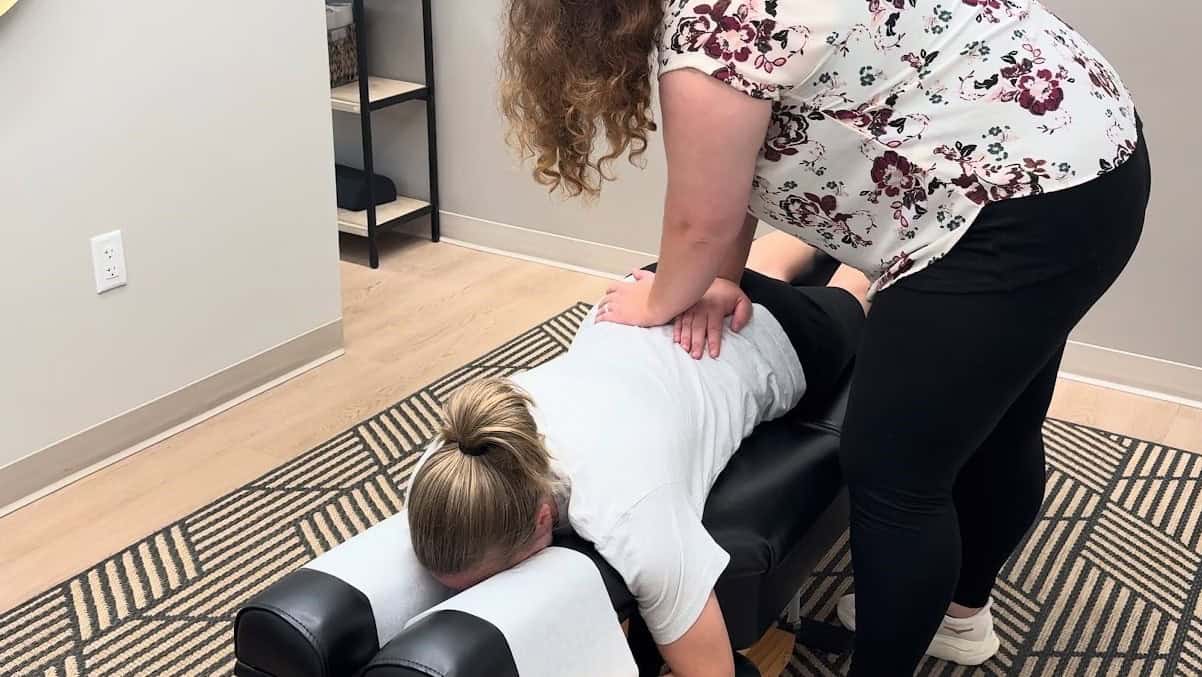
At Foundations Chiropractic, this is why we often encourage parents to be scanned and checked too.
Because sometimes the most important shift in the home begins when mom or dad finally receives the care they’ve been making sure everyone else gets.
Why INSiGHT Scans Matter for Parents Too
At Foundations Chiropractic, we don’t guess when it comes to the nervous system.
We use INSiGHT Scans to help us better understand how the nervous system is functioning, adapting, and responding to stress.
These scans are safe, gentle, and non-invasive. They help us look at patterns of stress, tension, and dysregulation within the nervous system.
For parents who are wound up and worn out, scans may show patterns of:
- Low adaptability
- Chronic stress overload
- High tension patterns
- Nervous system exhaustion
- Dysregulation within the autonomic nervous system
- A body that has been stuck in fight-or-flight for far too long
For many parents, seeing their scans is emotional.
Not because the scan is scary.
But because for the first time, they feel validated.
They finally see that their exhaustion is not weakness.
Their anxiety is not a character flaw.
Their short fuse is not because they don’t love their child enough.
Their body has been carrying years of stress without the support it needed.
And once we can see the pattern, we can begin building a plan to help the nervous system shift.
What Can Change When the Parent Gets Adjusted
When parents begin neurologically-focused chiropractic care, the changes often go far beyond how they feel physically.
Yes, many parents notice better sleep, less tension, improved digestion, fewer headaches, and more energy.
But the deeper changes are often the ones that affect the whole home.
They may notice they can pause before reacting.
They recover faster after a hard moment.
They feel more patient during meltdowns.
They can stay calmer when their child is overwhelmed.
They feel more present, more steady, and more like themselves again.
And children feel that.
When the parent’s nervous system begins to regulate, the child’s environment changes.
The home feels different.
Not perfect.
Not magically free of hard moments.
But calmer. Safer. More grounded.
That is the power of co-care.
You Are Not the Problem
If no one has told you this lately, please hear it now:
You are not the problem.
You are not failing.
You are not weak.
You are not “too emotional,” “too anxious,” or “not patient enough.”
You are a parent who has been carrying an incredible amount for a very long time.
And your nervous system may be tired.
At Foundations Chiropractic, we believe caring for the child also means caring for the family. Because your child’s healing journey does not happen in a vacuum. It happens in the context of your home, your rhythms, your relationships, and your nervous system.
You are not just the person driving your child to appointments.
You are part of the healing environment.
And you deserve to be cared for too.
Your Healing Matters Too
You have fought for your child.
You have researched, advocated, scheduled, prayed, cried, and kept going even when you felt like you had nothing left.
But you do not have to wait until you completely fall apart to get support.
Your healing and your child’s healing can happen alongside each other.
In fact, for many families, that’s when the biggest shifts happen.
If your child is already under care, it may be time to ask:
“What is my nervous system carrying?”
And if your family feels stuck in stress cycles, it may be time to look deeper.
Because sometimes the most powerful thing you can do for your child’s nervous system is finally take care of your own.
You’ve been the parent no one checked on.
Let that end here.